Last updated November 18, 2026





Free written scope consultation - allowances, timeline, and change-order rules on paper before a single trade is scheduled
Construction Warning Signs: A North Las Vegas Homeowner’s Reference Guide
A stair-step crack in a block wall is not settling. It is a shear failure along the mortar joint, usually driven by caliche expansion or a footing that isn’t deep enough for what the soil is doing, and it will not stop on its own. Most construction failure in North Las Vegas homes follows the same pattern: it announces itself early in stucco, block walls, flatwork, and roofing, homeowners file it under cosmetic, and a small repair becomes a major remediation. This guide teaches you to read those signals before they cost you. We’ll cover crack patterns, roof symptoms specific to our heat, driveway clues, interior signs of exterior failure, and the moments to stop work entirely.
Quick Answer
Construction warning signs in North Las Vegas usually appear first as stair-step cracks in block walls, map cracking or corner spalling in driveways, granule loss and lifted flashing on roofs, and baseboard staining that points to a stucco moisture breach. Vertical cracks and hairline shrinkage are often cosmetic. Stair-step, horizontal, and widening cracks are structural and need review. When in doubt, get an inspection before you spend another dollar on finishes.
Styles & brands we work with
- Kitchen remodeling
- Bathroom remodeling
- Home additions & ADU
- Roofing
- Windows & doors
- Driveway & pavers
- Fence
Table of Contents
- How to Read Crack Patterns: Stair-Step, Horizontal, Vertical
- Roof Warning Signs That Matter in North Las Vegas Heat
- Driveway and Flatwork Signals: Map Cracking vs. Linear vs. Spalling
- Interior Signals Caused by Exterior Failure
- Stucco and Block Wall Warning Signs
- Five Signs to Stop Construction Immediately
- What an Inspection Actually Looks At
- When to Call a Professional
How to Read Crack Patterns: Stair-Step, Horizontal, Vertical
The shape of a crack tells you more than its size. A crack two feet long in the right place matters more than a ten-foot hairline that goes nowhere. Before you call anyone, photograph the crack with a coin taped next to it for scale and note whether it has changed since you closed on the house. That documentation is worth more to a mason or engineer than a verbal description.
Stair-Step Cracks
Stair-step cracks zigzag up a block or brick wall following the mortar joints. They are the signature of movement that concentrates along the weakest path in the wall. In North Las Vegas, caliche is often the culprit. That cemented layer of soil expands and contracts differently than the fill above it, and a footing that wasn’t engineered for the actual soil profile will shift. Stair-step cracks that are uniform hairline may be stable. Stair-step cracks that widen at one end, or that appear with a door or window that no longer closes squarely, need an engineer, not a mason with a tube of caulk.
Horizontal Cracks
A horizontal crack running along a mortar joint, especially near the top or bottom third of the wall, often points to pressure the wall wasn’t designed to resist. Lateral soil pressure, a failing retaining situation, or a footing that has rotated can produce this. Horizontal cracks are the ones we treat most seriously on block walls because they tend to progress.
Vertical Cracks
Vertical cracks are frequently the most benign of the three. Shrinkage cracks from curing concrete or stucco are typically vertical or diagonal and narrow. A vertical crack that has shifted so one side sits proud of the other is no longer shrinkage; it is displacement. Measure the offset with a straightedge. If you can catch a fingernail on it, get it looked at.
The distinction matters because the wrong trade fixes the wrong problem. A mason repoints a stair-step crack and it comes back in a season because the footing was never addressed. We see this in older North Las Vegas neighborhoods where the original soil prep was minimal. Getting the diagnosis right is the entire repair.
Roof Warning Signs That Matter in North Las Vegas Heat
Our roof failure here is thermal, not storm-driven. The sun loads a roof surface day after day, and the damage shows up as material breakdown long before it shows up as a leak in the house. On an asphalt shingle roof, granule loss is the first tell. Look in the gutters and at the bottom of downspouts after a wind event. A handful of granules is normal on a new roof. A steady accumulation on a roof older than about twelve years means the shingle is nearing the end of its protective life. Architectural grades from manufacturers like Owens Corning, IKO, and Atlas generally hold their granules longer than builder-grade 3-tab, which is why we specify the brand before the crew arrives.
Flat Roof and Low-Slope Signals
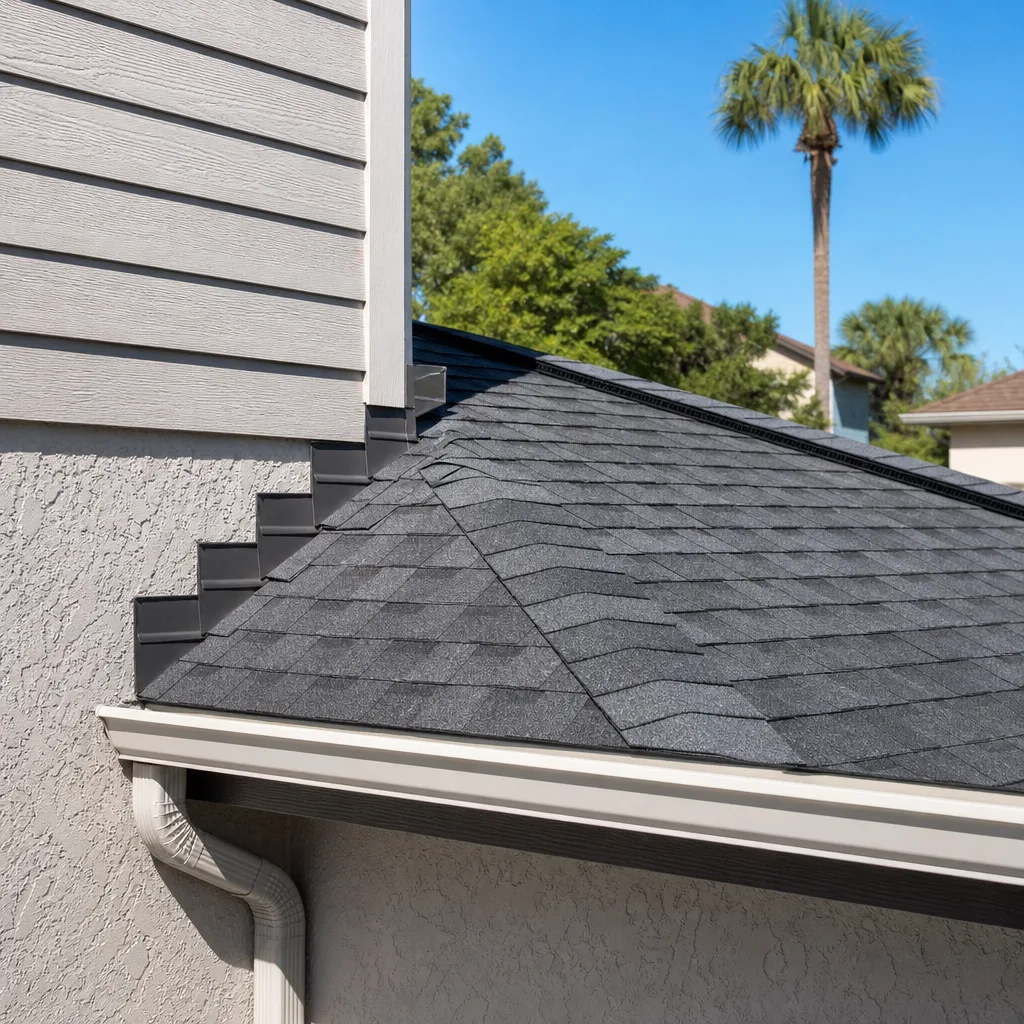
On flat or low-slope roofs, the weak points are the edges. Lifted flashing at the parapet wall is the most common call we get after a monsoon wind. The flashing membrane pulls away from the wall, water gets behind it, and the roof reads dry on top while the elastomer underneath is failing. On modified bitumen surfaces, watch for blistering. A blister is a bubble where trapped moisture or trapped air has heated and separated the plies. They look like small domes. A few are manageable. A field full of blisters means the sheet is on its way out.
What to Inspect Once a Year
- Granule accumulation in gutters and at downspout outlets
- Shingle tabs that are cupped, curled, or missing along the ridge
- Flashing condition where the roof meets a wall or parapet
- Any blister or bubble on a low-slope section
- Ceiling stains, which we cover below
For a deeper dive on materials and what to choose, see our page on North Las Vegas Construction roofing systems.
Driveway and Flatwork Signals: Map Cracking vs. Linear vs. Spalling
Every driveway cracks. The question is which kind. Homeowners in North Las Vegas tend to lump all cracking together and either panic or ignore it entirely, and both responses cost money. There are three patterns worth knowing, and they have different causes and different fixes.
Map Cracking
Map cracking is the spiderweb pattern: many small cracks interlocking like a dried mudflat. It usually comes from one of two things: a concrete mix that was too wet when poured, or surface drying that happened before the slab cured. Map cracking is generally cosmetic. It’s the slab skin complaining, not the structure. A thin overlay or a decorative paver surface will resolve it, and it’s the kind of issue we see on older slabs around North Las Vegas residential streets.
Linear Cracking
A single long crack that runs straight across a slab is the pattern to check. If it’s a control joint that opened as designed, fine. If it’s a crack running parallel to a wall or through the middle of a driveway panel with no joint nearby, the slab is moving in a way the pour didn’t account for. Subgrade prep and joint placement are the two things that separate a driveway that lasts from one that fails in a decade.
Corner Spalling
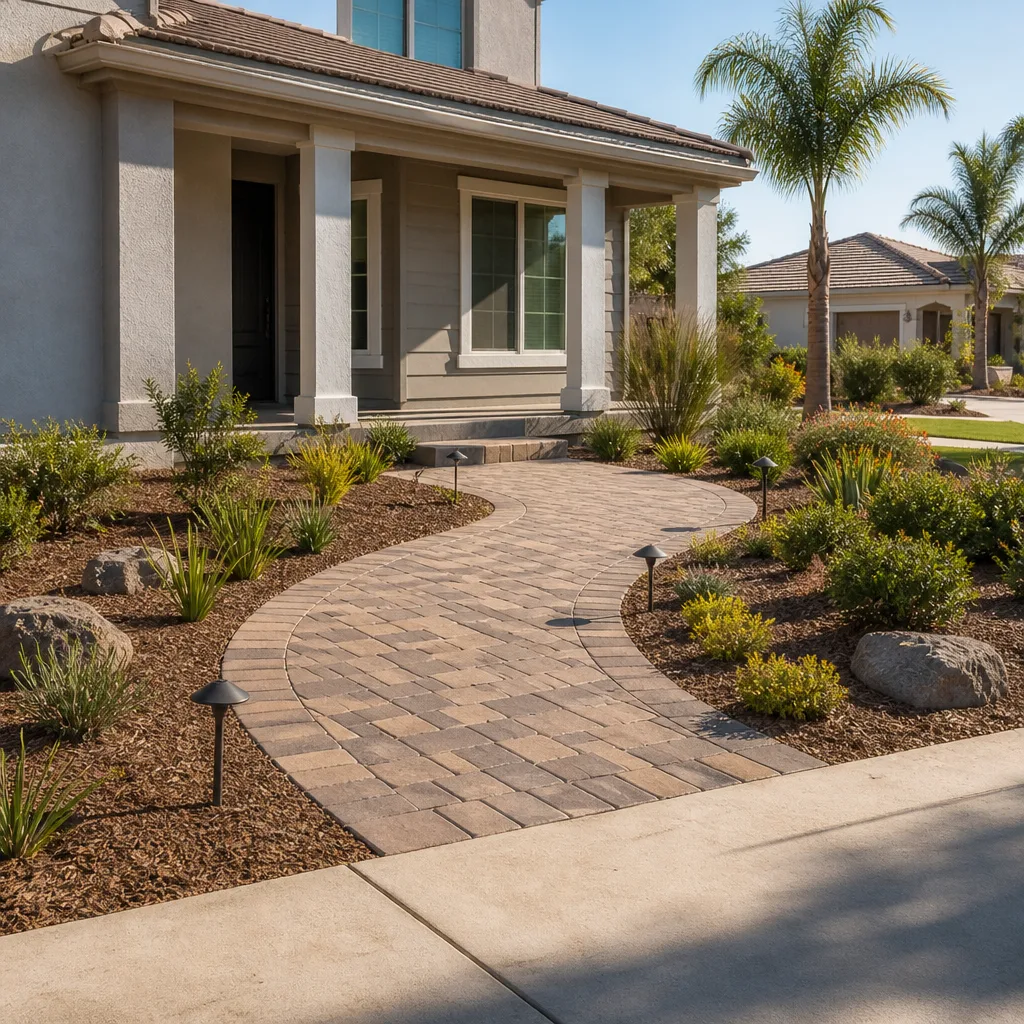
Spalling is the chipping away of concrete at edges and corners. It comes from freeze-thaw cycles elsewhere, but in North Las Vegas it usually comes from a slab edge with inadequate cover over the rebar, or from water running off the roof and eroding the edge. Spalling at the corners of a driveway panel lets water into the slab, and that accelerates every other problem. A properly engineered driveway with driveway & pavers systems (Belgard and Techo-Bloc, for example) avoids the worst of this because the pavers are the wear surface and the base drains below.
Interior Signals Caused by Exterior Failure
Water is a patient traveler. It enters the stucco or a roof edge, migrates through the assembly, and shows up indoors where you least expect it. The single most misunderstood warning sign we see in North Las Vegas homes is a stained baseboard or a dark ring on the bottom of drywall with no obvious water source directly above it. That stain is not a plumbing problem. It is stucco moisture breach. A stucco wall with a hairline crack or a failed seal at a window trim lets rainwater in during a monsoon storm, and the moisture migrates down the wall cavity and pools at the baseboard.
How to Test What You’re Seeing
- Press a moisture meter against the drywall above the stain, not on it. Drywall reads wet even after the source is gone.
- Go outside and find the exterior wall face directly opposite the stain. Look for a crack, a lifted caulk joint, or failed window trim seal.
- Check for efflorescence, the white powdery bloom that shows up on stucco and block when moisture has been driving through it and evaporating out.
- Look at baseboards on the same wall in two or three rooms. A breach shows a pattern, not a single isolated spot.
- Document with a photo from both sides and the date. This matters for warranty claims.
If you find the breach early, the fix is a stucco patch and a proper seal. Find it a season later and you’re looking at drywall replacement, possible mold remediation, and stucco repair. The sequence is always cheaper to fix from the outside first. If your roof is the suspect in a ceiling stain, our roofing team can inspect. Same-day service is often possible. Call (833) 734-2032.
Stucco and Block Wall Warning Signs
Stucco in our climate is under constant thermal stress. The south and west elevations take the worst of it. The failures show up as cracking, bubbling, separation at control joints, and staining near penetrations. A stucco wall that has been properly applied over a drainage plane and properly sealed at penetrations lasts. When it hasn’t, you get cracks that widen season by season as the material expands and contracts.
What to Look For on Block Walls
Block walls are common across North Las Vegas neighborhoods, and they reveal the same information as the foundation. Check the wall from one end to the other at about shoulder height. Look for:
- Stair-step cracking through mortar joints – structural, especially if widening
- Horizontal separation near the top or base – pressure or rotation, get it reviewed
- Vertical cracking directly above a control joint – usually normal expansion behavior
- Wall leaning or bowing – footing and soil issue, do not delay
- Efflorescence at the base – moisture moving through the wall
- Rusted or leaning steel posts within the wall – compromised structural member
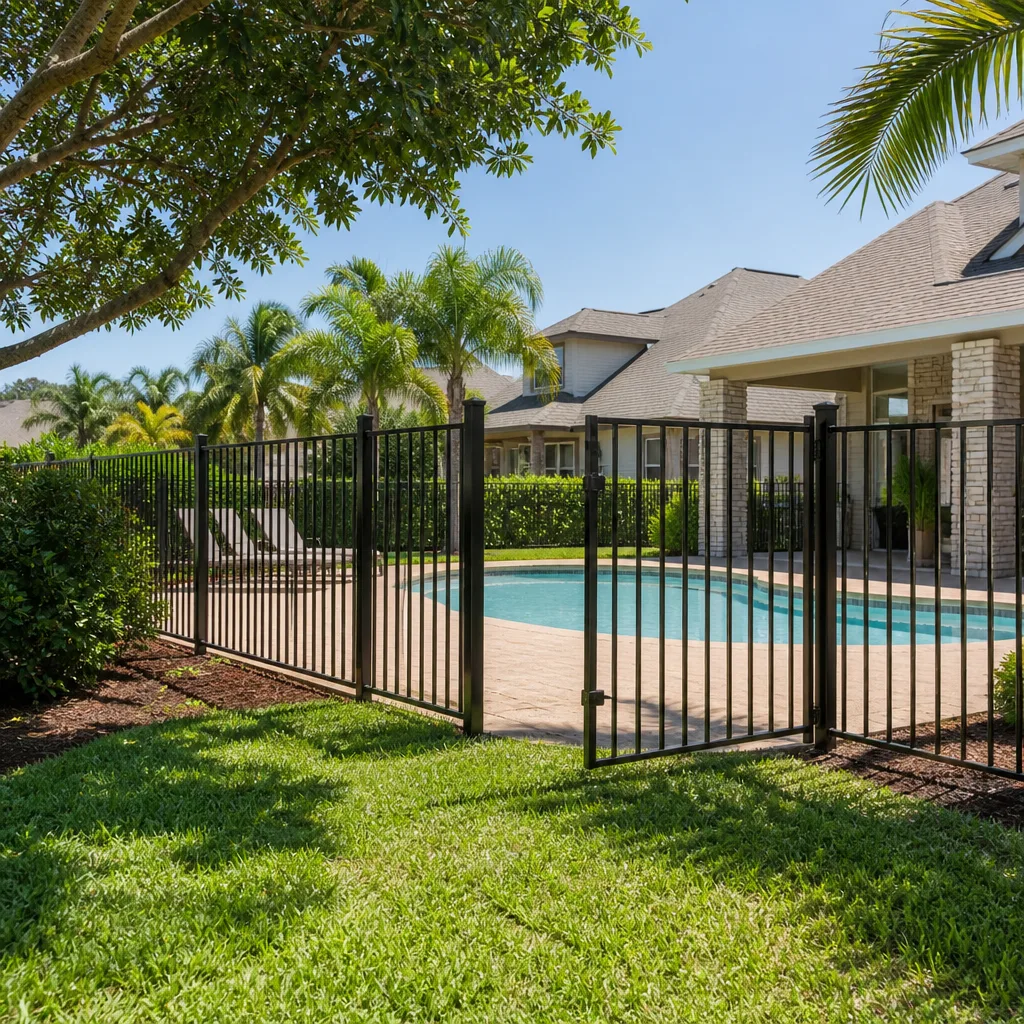
A block fence is not just a privacy element. It’s a retaining structure if it holds back grade, and it’s a safety issue if it’s leaning. When a wall has moved to the point of tilt, an engineer should review before anyone installs a new fence or gate. If you’re already planning a replacement, our fence installation service covers the full envelope from footing up, so the new wall is built for what the soil here is actually doing.
Five Signs to Stop Construction Immediately
If you’re mid-project and you see any of the following, stop work and get an inspection before the next step. Continuing on top of a structural signal almost always multiplies the eventual cost.
- A crack that widens week over week. Growth means movement is active. Adding a finish, a cabinet, or a paver on top of active movement hides the problem and doesn’t fix it.
- Any shift where two sides of a crack sit at different heights. Displacement is a structural signal, not a cosmetic one.
- A wall leaning out of plumb by more than you can see with your eye. Hold a 4-foot level against the wall face and note the gap at the top. Any meaningful gap needs review.
- Water where it shouldn’t be during a monsoon. A livable space that gets water through a wall, a window, or a door means the building envelope is failing. Stop interior work until the envelope is resolved.
- Any framing member that has moved, split, or cracked after installation. That means the connection isn’t holding the way it was designed to. An engineer determines whether it needs reinforcement, replacement, or additional bracing.
These five are non-negotiable in our book. If a crew keeps working past them, the homeowner should hold the next payment until the inspection is done.
What an Inspection Actually Looks At
Homeowners often imagine an inspection is a cursory walk-through. In practice, a useful inspection looks at the load path of the structure, the envelope of the building, and the drainage around it. The load path is how weight transfers from the roof down through walls and footings to the ground. Any interruption in that path shows up as cracking or deflection somewhere in the chain.
The Envelope
The envelope is everything that keeps weather on the outside: roof, walls, windows, doors, and the sealant and flashing that connect them. Inspectors check penetrations, terminations, and the transitions where one material meets another. Most leaks originate at a transition, not in the middle of a field of material.
The Site and Drainage
In our climate, water is scarce for months, then comes as a concentrated burst. A lot that doesn’t drain away from the house during a monsoon forces water against footings and under driveways. An inspector will look at grade and at where water flows during a heavy rain. Take a video during the next storm, if you can. It’s the fastest way to demonstrate to anyone what your particular lot is doing.
If you’re planning a larger project that could be affected by any of these findings, our page on home additions & ADU explains how the site report informs everything from foundation type to how the roof ties in. Same-day service is possible for most inspections. Call (833) 734-2032.
When to Call a Professional
Call a professional when any warning sign appears on a load-bearing wall, when cracking is progressive, when exterior moisture reaches interior finishes, when a block wall leans, when a roof has lost a material amount of granules or lifted its flashing, and when a driveway has spalled down to the rebar. All of these are signals that the cost of fixing correctly now will be considerably less than fixing after another monsoon or another summer. North Las Vegas Construction offers free estimates in North Las Vegas. Call (833) 734-2032. We handle the scope and you make the selections, from Cambria countertops to a roof from Owens Corning or Atlas. Our technicians have up to 11 years of experience with every material we install.
See the difference
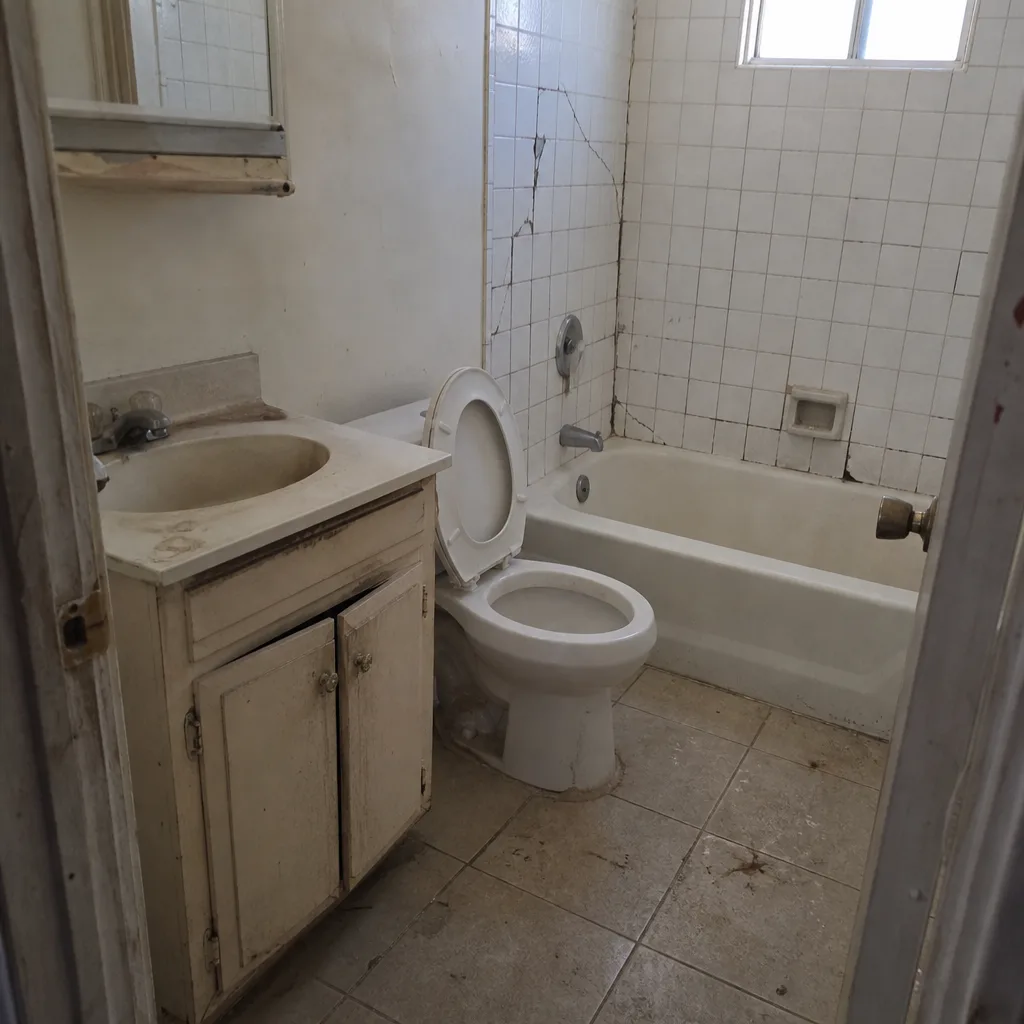 Before
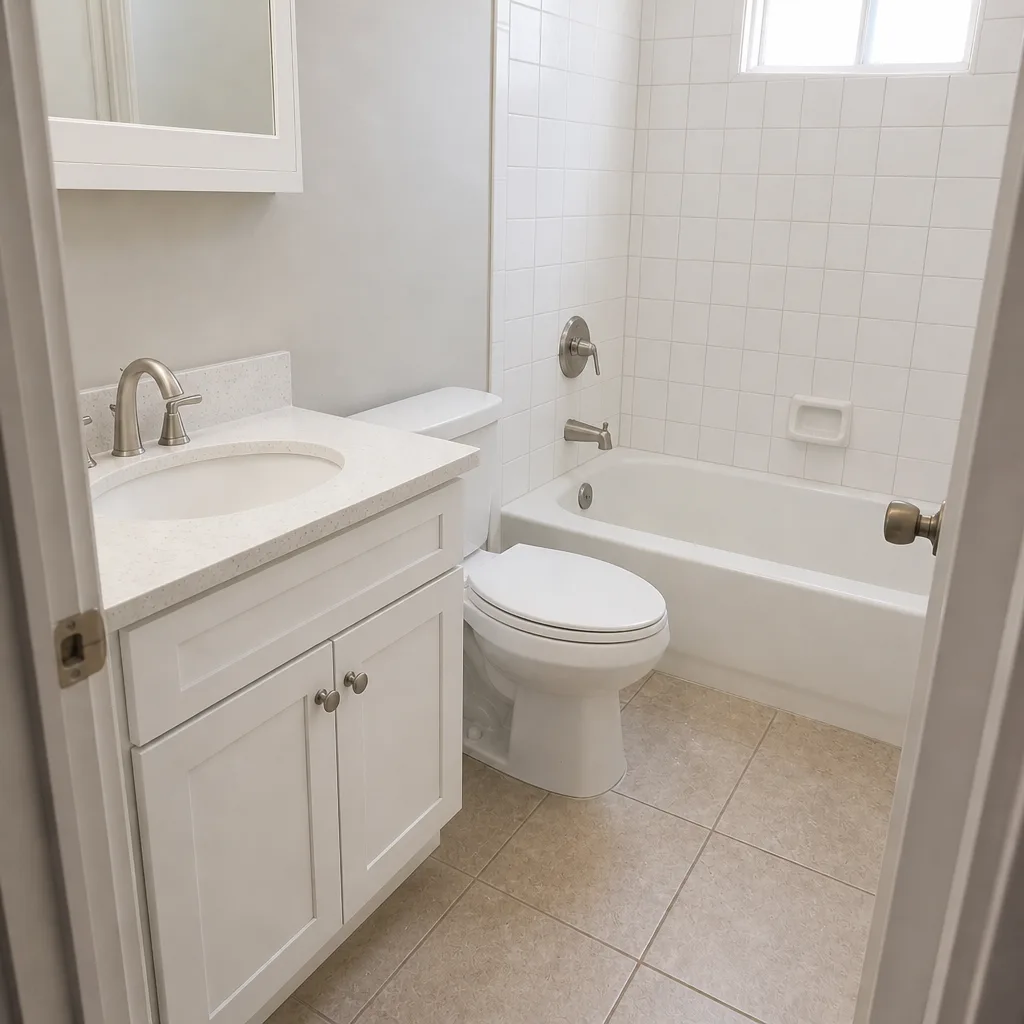 After
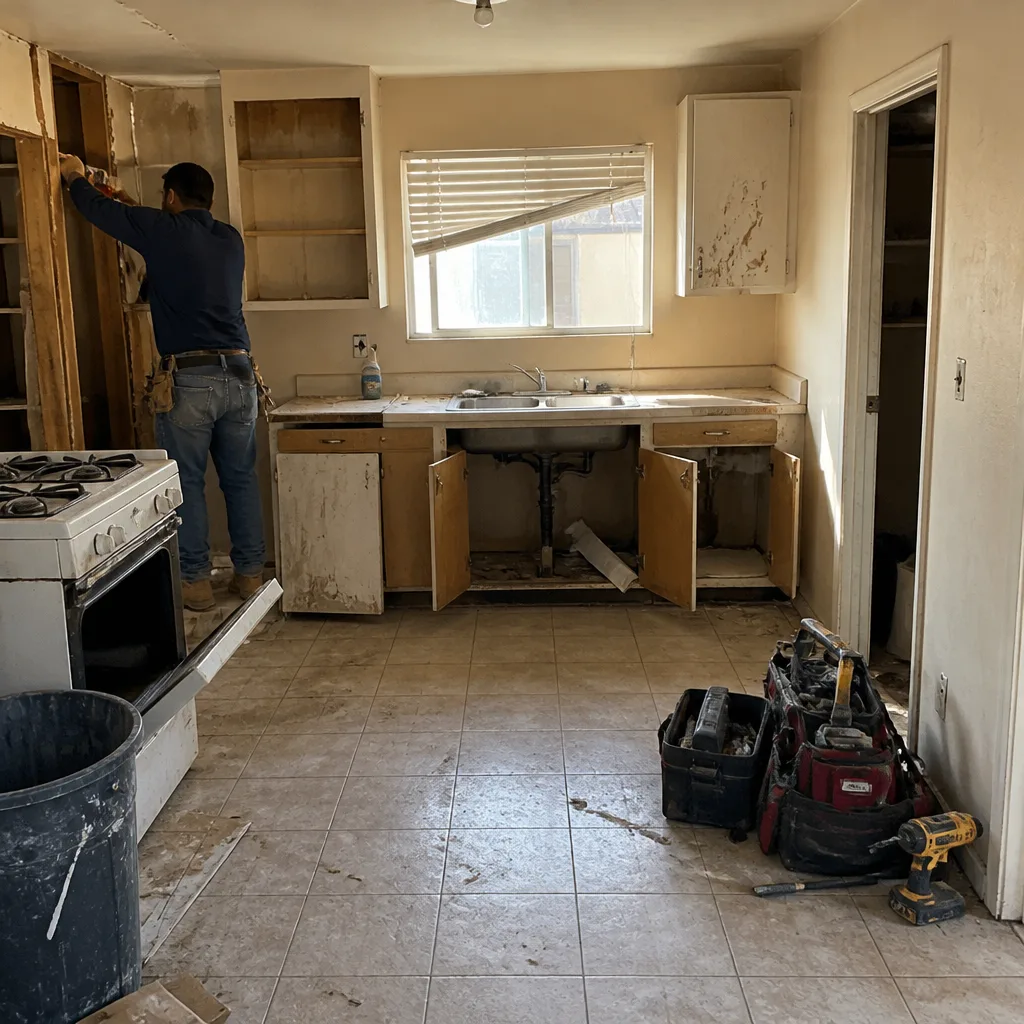 Before
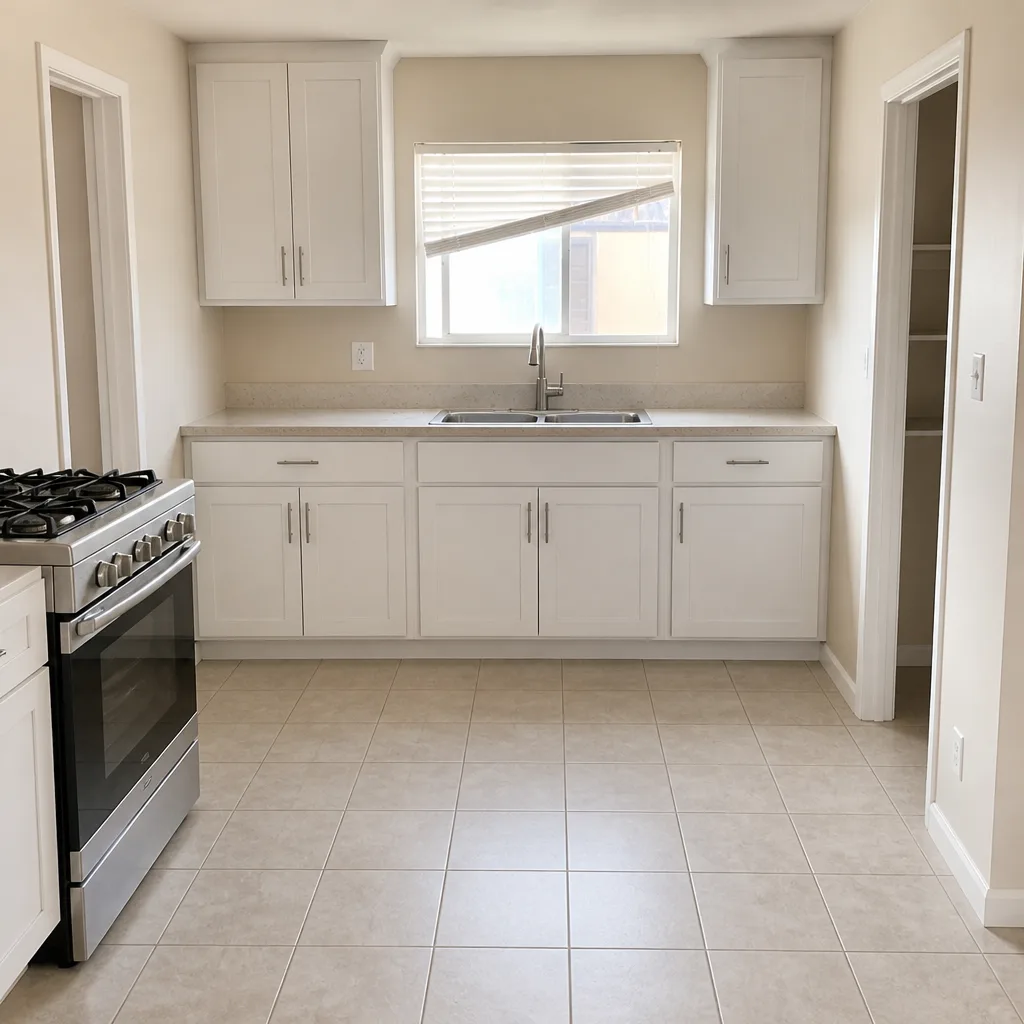 After
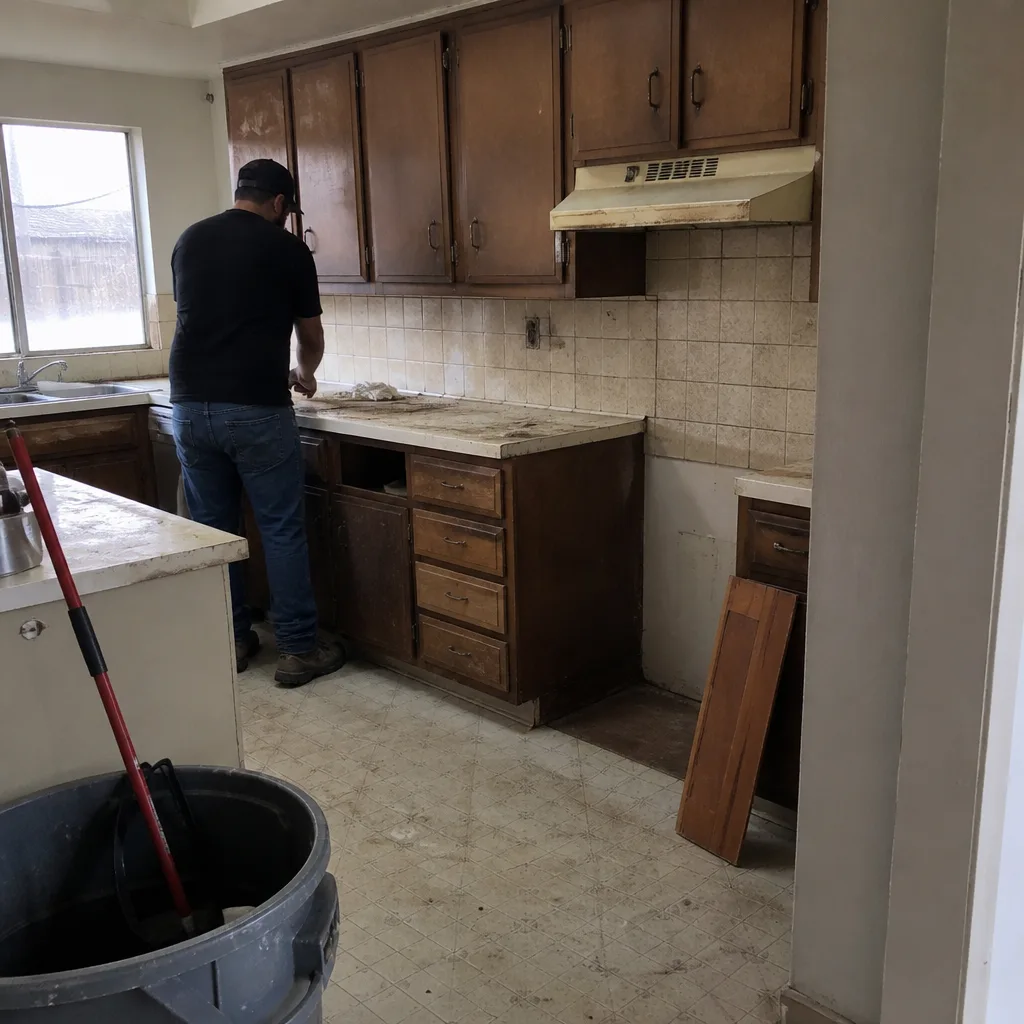 Before
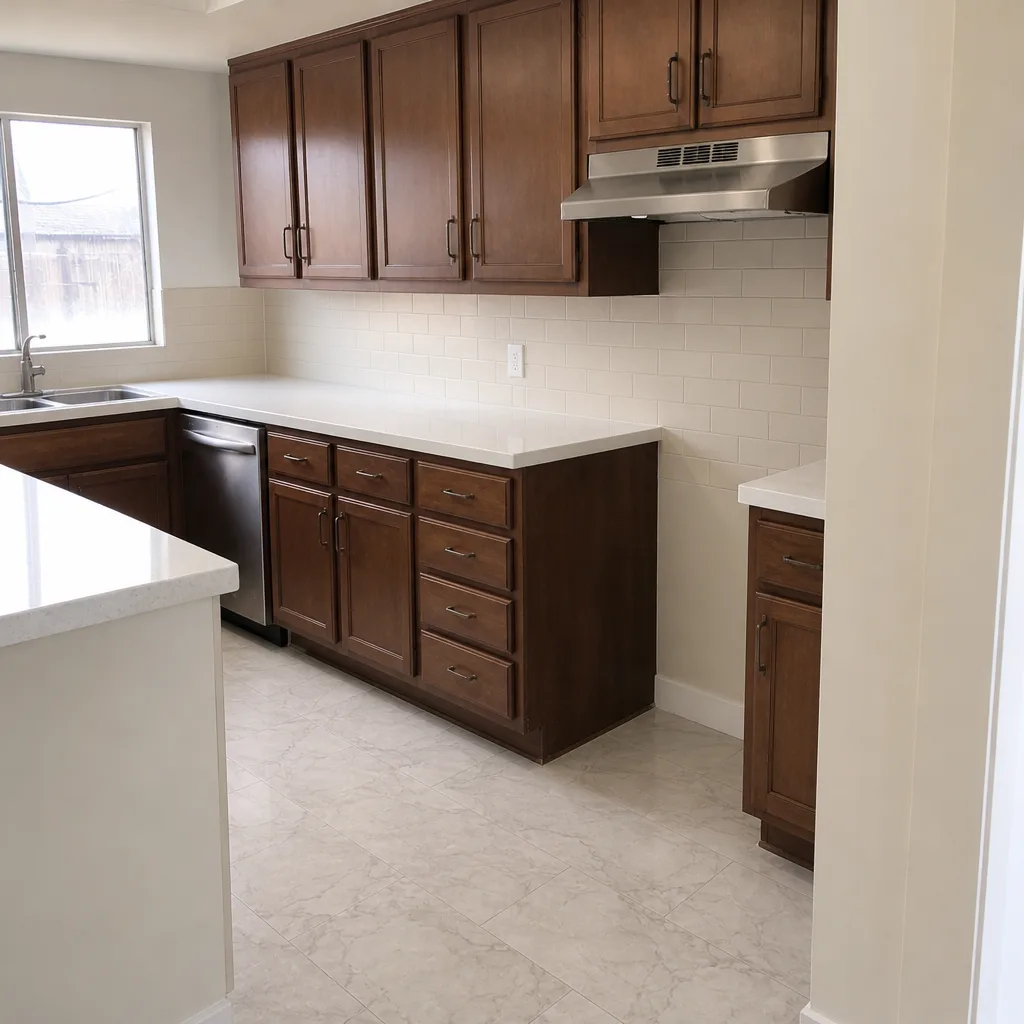 After
Frequently Asked Questions

No. Map cracking is usually cosmetic and comes from curing and mix issues. Linear cracking through the middle of a panel and corner spalling are the patterns that point to subgrade or edge issues and are worth getting evaluated. Send a photo with a coin for scale and we can tell you whether an inspection is warranted.
Stair-step cracking follows the mortar joints and indicates shear movement along the wall. In North Las Vegas, it’s often driven by caliche expansion or a footing that doesn’t match the actual soil. A stable hairline stair-step may be fine. A widening stair-step is a structural flag.
Granule accumulation in gutters, cupped or missing shingle tabs along the ridge, and any lifted flashing are the three signals to act on. A shingle roof in our climate usually starts showing material wear by the early teardown stage when granules are gone. Turn to a brand with a real life expectancy, such as Owens Corning, IKO, or Atlas. Call (833) 734-2032 for a free roof inspection.
Water enters through a stucco crack or failed seal at a window, migrates down the wall cavity, and pools against the baseboard before it visibly damages the wall face. The outside wall face directly opposite the stain is where the breach is. Fix it from the outside first.
An engineer, when the crack is stair-step, horizontal near a footing, or clearly widening. A mason can address vertical shrinkage cracking and normal repointing. The wrong trade on a structural crack means the problem comes back.
A site and structural inspection before any foundation, addition, or ADU work is poured or framed. The signal that shows up here determines the foundation type and can dramatically change the scope. Our team can run it as part of a free estimate. Call to schedule.
The Bottom Line
Failure has a pattern in North Las Vegas. Stair-step and horizontal cracks in block walls are structural, not cosmetic. Granule loss, lifted parapet flashing, and blisters on flat roofs are the roof signals that matter. Map cracking on driveways is often benign while linear and spalling are not. Baseboard stains are usually exterior moisture, not plumbing. Five signs mean stop work and get an inspection. Reading these early turns a five-hundred-dollar fix into a five-hundred-dollar fix instead of fifteen thousand. If you see any of them, get an inspection now rather than after the next monsoon. Call (833) 734-2032. Our free estimate gives you a written line-item scope, so nothing is added after work begins.
North Las Vegas Construction brings a single-contractor scope to everything from kitchen and bath remodels to roofing, windows, doors, driveways, pavers, fences, and full additions or ADUs. We work with brand names like GAF, CertainTeed, Therma-Tru, and KraftMaid, and specify them up front so the material is locked in before the first nail is driven. That gives you one place to call for every project across the whole property. Call (833) 734-2032. We answer 24/7. Fast dispatch from 7am to 7pm, Sunday through Friday.
Written by the team at North Las Vegas Construction.