Last updated November 18, 2026

Free written scope consultation - allowances, timeline, and change-order rules on paper before a single trade is scheduled
Driveway & Pavers Troubleshooting in North Las Vegas: Common Problems and How to Fix Them
If your pavers are rocking but not cracking, the problem isn’t the pavers. It’s what’s underneath them. That single distinction explains why so many paver repairs in North Las Vegas fail within a couple of years: somebody replaced the surface without ever touching the real failure point, an undersized base that caliche and desert heat tore apart from below. The pavers themselves were doing their job the whole time.
This guide gives you a diagnostic framework, so you can walk outside, read your driveway like a symptom chart, and know whether you’re looking at a cheap spot fix or a full re-do. You’ll learn the three root causes behind almost every paver failure in North Las Vegas, how to tell which one you have, and the questions that separate a real repair quote from a guess.
Quick Answer
Most North Las Vegas paver problems trace back to one of three root causes: an undersized or uncompacted base, failed joint sand, or a paver spec that’s wrong for the desert freeze-thaw and caliche conditions here. Rocking pavers point to base settlement, cracking points to a base or spec problem, and white chalky bloom points to moisture wicking through the joint. Diagnosing which layer failed before pricing the repair is the difference between a fix that lasts and one that comes back.
Styles & brands we work with
- Kitchen remodeling
- Bathroom remodeling
- Home additions & ADU
- Roofing
- Windows & doors
- Driveway & pavers
- Fence
Table of Contents
- The Three-Symptom Diagnostic: Rocking, Cracking, and Efflorescence
- Why the Base Fails First in North Las Vegas
- Joint Sand vs. Base Settlement: How to Tell Them Apart
- Efflorescence in the Desert: Why It’s Worse Here
- The Repair Math: Spot Repair or Pull the Zone?
- Contractor Red Flags in a Repair Quote
- How to Spec a Driveway That Won’t Need This Guide
- When to Call a Professional
The Three-Symptom Diagnostic: Rocking, Cracking, and Efflorescence
Every paver problem announces itself with one of three visible symptoms. Each one points to a different layer of the assembly, and each one needs a different intervention. Get this part right and the rest of the repair decision falls into place.
Symptom 1: Rocking Pavers
A paver that rocks underfoot, or a corner that dips when you step on it, is almost always a base or bedding problem. The paver is intact. The joint sand may still be full. But the layer of compacted aggregate and the thin bedding sand under it have settled, loosened, or washed out in a pocket. In North Las Vegas, this often follows a monsoon season where water got under the edge of the driveway and worked its way through the base. It also happens on driveways that were laid over a base that was never compacted to full depth in the first place.
Rocking is the most repairable symptom. It’s localized, the pavers are usually reusable, and the fix is about re-establishing support underneath.
Symptom 2: Cracked or Chipped Pavers
Cracked pavers are a more serious signal. A paver rarely cracks on its own if the base under it is solid, so a crack means either point-loading from below (a void or a rock directly under the unit), or a paver spec that wasn’t up to the load. Thin pavers, low-strength concrete pavers, or single-unit failures along a driveway’s turning path all show up this way. A crack along a whole field is a base problem. A crack in one or two pavers next to each other is often a spec or installation issue.
Symptom 3: Efflorescence
White, chalky, salt-like bloom on the surface of the pavers is efflorescence. It forms when water moves through the concrete and carries soluble salts to the surface, which then deposit as the water evaporates. Efflorescence doesn’t mean the paver is failing. It means moisture is moving through it, and in the desert, that movement almost always comes from under the pavers, not from the sky.
When you can identify which of these three you’re looking at, you can start narrowing down the layer that actually needs work. That is the point where a repair is either cheap or expensive, and it’s why North Las Vegas homeowners who skip the diagnosis usually wind up paying twice.
Why the Base Fails First in North Las Vegas
A paver driveway is a layered system. On top are the pavers. Below them is a thin layer of bedding sand, usually about an inch. Below that is the base, which should be compacted, graded aggregate several inches deep, and below that, native soil. The pavers are the visible layer and the easiest to blame. They’re also rarely the problem.
North Las Vegas soil makes the base the weak link in a way it isn’t in most of the country. Caliche, the calcium-carbonate hardpan that shows up across the valley, is unforgiving to any base that isn’t cut deep enough, drained properly, and compacted in lifts. Caliche doesn’t drain. It doesn’t flex. Water that gets trapped between the base and caliche has nowhere to go, so it works the edges of the base loose, softens the bedding sand, and lifts the pavers out of alignment.
That’s the mechanism most repairs miss. When someone pulls up rocking pavers and re-sets them in fresh sand without checking the base under them, they’ve restored the symptom and left the cause untouched. The pavers will look right for a few months. Then the next wet season, or the next 105-degree summer followed by a cold snap, and the base loosens again.
What a properly built base involves in this climate:
- Excavation to full depth. The base has to be thick enough for a driveway’s loading, and the subgrade has to be exposed and proof-rolled before aggregate goes down.
- Subgrade prep over caliche. In North Las Vegas, this can mean scarifying or over-excavating caliche so the base has a footing it can actually compact against, and grading it so water runs off rather than pooling.
- Aggregate placed in lifts. Base material goes down in layers, each one compacted to density before the next layer goes on. Placing the whole base at once and compacting the top leaves loose material deep in the section.
- Edge restraint. A paver driveway that has no solid edge restraint spreads outward under load, and once the field loosens, the joints open and water gets in.
- Bedding sand, screeded level, then pavers, then joint sand swept in. Get the bedding and joints right and the field holds.
If you take nothing else from this guide, take this: in North Las Vegas, base inspection is the step nobody wants to sell you because it’s the one they can’t shortcut.
Joint Sand vs. Base Settlement: How to Tell Them Apart
Joint sand failure and base settlement both make pavers move, so it’s normal to confuse them. The difference is where the movement originates, and you can usually tell without pulling up the entire installation.
Here’s the field test. Wiggle a single paver and watch its neighbors. If only that one paver rocks, and the pavers around it are solid and the joints between them look full, your problem is local: a small pocket of bedding sand under that unit has loosened. If stepping on one paver sends a wave through the whole area, or if a whole section of the driveway flexes as a unit, the base under the section has settled or washed out, and the joint sand has just been the first casualty.
Quick checklist: which layer failed?
- Joints look empty or washed out, but pavers aren’t rocking: joint sand problem. Sweep in new sand and re-seal.
- Joints look full, pavers rock in one or two spots: local bedding issue. Spot repair.
- Joints look full, a whole section flexes or dips: base settlement. The zone needs to come up.
- Joint sand keeps disappearing after every sweep: movement somewhere below is pumping the sand out. Look at the base before you buy another bag.
- Edges spreading outward or the field walking away from the house: edge restraint failure, usually combined with a base that’s letting load push outward.
If you sweep new polymeric sand into joints that are already opening because the base is moving under them, the sand fails again in months. We’ve watched that cycle play out on driveways across Aliante and the older neighborhoods off Craig Road: joints refilled repeatedly, pavers rocking the whole time. The joint sand was never the problem. It was the messenger.
Efflorescence in the Desert: Why It’s Worse Here
Efflorescence looks like mistreatment. It isn’t. It’s the natural result of water moving through concrete pavers and carrying salts to the surface, where they dry into a white haze. What makes it aggressive in North Las Vegas specifically is the swing between wet and dry. Monsoon rains soak the driveway and push water into the base and the pavers. Then the temperature spikes, the moisture gets pulled up through the pavers, and it evaporates fast, leaving the salt bloom on the surface. Repeat that cycle a few times and a driveway that never showed efflorescence can look chalky by the end of the summer.
Coastal installs deal with efflorescence too, but the moisture profile is different. Here, the bloom often comes from the base, not the sky, which is why a sealer sometimes doesn’t help: if the pavers can’t dry through the joint, water wicks through them and the salt rides along.
Penetrating sealer vs. film-forming sealer
There are two families of paver sealer, and only one of them addresses efflorescence in this climate.
- Penetrating silane-siloxane sealers soak into the concrete and chemically block water absorption at the pore level while still allowing vapor to escape. They don’t change the look of the pavers. They’re the right choice for efflorescence in a dry desert climate because the paver can still breathe, so moisture underneath doesn’t get trapped and forced up through the surface.
- Film-forming sealers (acrylic, polyurethane) sit on top of the paver and create a visible coating. They look glossy and they can be fine on a protected walkway, but on a driveway with a moisture problem they can trap vapor and make efflorescence, chalking, or blistering worse. Once water gets underneath a film, it lifts the film as it tries to escape.
The practical rule for a North Las Vegas driveway: fix the moisture source first (which usually means fixing the base or the drainage), clean the efflorescence off with an appropriate cleaner, let the pavers dry fully, and then apply a penetrating silane-siloxane sealer if you want to slow it from coming back. Film-forming sealers as a first move usually make the problem look worse, faster.
The Repair Math: Spot Repair or Pull the Zone?
There’s a line at roughly 10 square feet. Below that, a spot repair is almost always the right call. Above it, the hidden labor of re-leveling and re-compacting usually makes pulling the whole zone the cheaper option, even though it feels bigger.
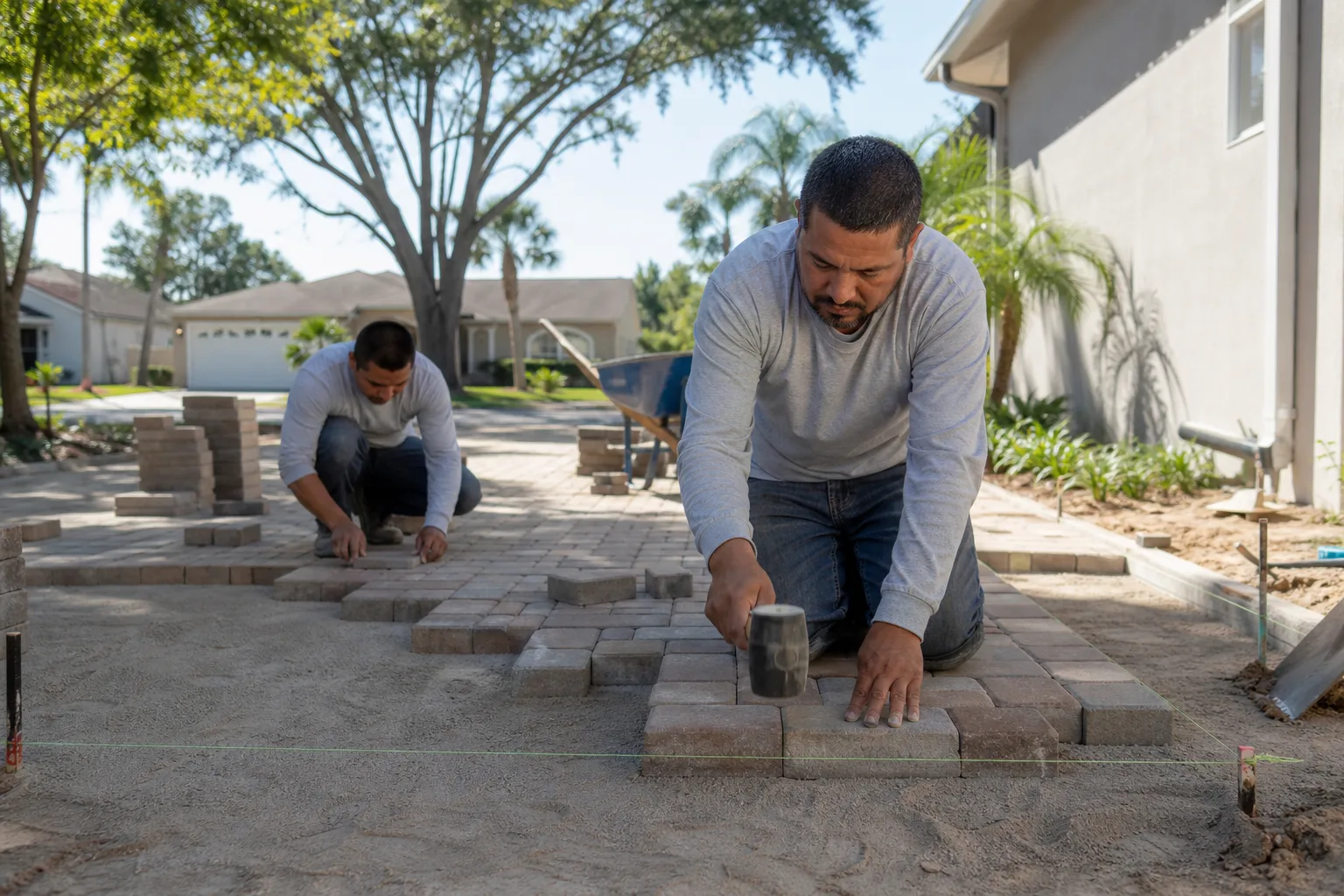
Here’s why. A spot repair on a small area of rocking pavers is genuinely cheap. You lift a handful of units, correct the bedding sand, replace the pavers, re-sand the joints, and you’re done. One person, part of a day, minimal materials.
A larger settlement zone is a different job. To fix it correctly, a contractor has to lift every paver in the affected area, remove the old bedding sand, get down to the base, test whether the base is still compactable, add aggregate if it’s not, re-compact in lifts, re-screed new bedding, re-set the pavers, and re-sand the joints. That’s most of the labor of a new install on that square footage. Once you’re there, the extra cost of extending the work to a full re-do of a defined zone is small compared to doing the same procedure twice.
A rough decision guide:
- Under 10 sq ft, single-symptom, no edge spreading: spot repair. Budget accordingly.
- 10 to 40 sq ft, one localized dip, edges stable: zone repair. Pull, re-compact, re-set.
- More than 40 sq ft, or multiple zones, or edges spreading: treat it as a full re-do of the driveway section, including edge restraint and base work.
- Efflorescence plus rocking: moisture is moving under the field. Inspect the base before you discuss sealer.
- Cracks spreading across the field: check the base first and the paver spec second. Don’t sell yourself a re-surface until you know which one failed.
Those numbers are estimates, and the actual scope depends on what’s under the driveway. That’s why we inspect the base before pricing anything, and why our written estimate for driveway & pavers work shows the line items, not just a total. If a quote you’ve received doesn’t mention base inspection at all, the number you’re getting is a guess.
Contractor Red Flags in a Repair Quote
You don’t need a construction background to spot a repair quote that’s guessing. You need to know what a real one includes. These are the signals that separate a contractor who has diagnosed your driveway from one who’s pricing a symptom.
- The quote prices the visible repair but never mentions the base. If the estimate covers lifting pavers, re-sanding, and re-setting but says nothing about testing or re-compacting the base under them, the contractor is treating the surface. That repair fails when the base moves again.
- No mention of edge restraint on a driveway with spreading edges. Edge failure doesn’t fix itself, and if the quote doesn’t address it, the field will keep walking outward.
- A sealer sold as the fix for efflorescence. Sealer slows water absorption. It doesn’t drain a base or fix a drainage grade. Anyone who recommends film-forming sealer on a driveway with an active moisture problem is selling you a coating, not a repair.
- A quote with a single lump-sum number and no line items. Repairs are easy to scope honestly. If the written quote is one line, ask for the breakdown, and be skeptical of anyone who resists giving it.
- No written estimate and no line-item scope at all. Not negotiable on a repair that involves lifting finished pavers.
- The spec is “whatever we have left over.” Paver spec matters. North Las Vegas driveways carry real loads and take real heat, so mixing paver types from different runs, or using a lower-strength unit that isn’t rated for the load, is a red flag on the materials side, not just the labor side.
- Nobody asks about drainage. Where does water go off the driveway? In this climate it drains to a low point or it runs under the edge, and there’s no repair that works long-term without an answer to that question.
We specify the paver brand before the quote is written, because the material choice is part of the diagnosis. When the driveway calls for designer-grade hardscape, we work with North Las Vegas Construction product lines like Belgard and Techo-Bloc, which gives a homeowner engineered durability and a look that matches the house, not just a minimum-spec concrete unit. That’s how the repair and the material decision are made together instead of one after the other.
How to Spec a Driveway That Won’t Need This Guide
Every failure covered in this guide is preventable at the spec stage. The choice you make when the driveway goes in determines whether you’re on this page two summers from now. If you’re planning a new install rather than a repair, these four decisions matter most.
- Demand a base depth and compaction spec in writing. The estimate should show the base depth, the aggregate type, and the compaction method. This is the single biggest variable in how long a paver driveway lasts in North Las Vegas, and the one most easily hidden in a single-line quote.
- Choose the paver for the load, not just the look. Driveway pavers need a compressive strength suited to vehicle traffic and a thickness rated for the load. Belgard, Techo-Bloc, Unilock, and Cambridge Pavers all publish load ratings for their product lines. The color is the last question, not the first.
- Address drainage on the plans. Grade the base so water runs off the driveway rather than into it, and consider a drainage channel or a slight slope. Low spots in a paver driveway in North Las Vegas become problems the first monsoon season.
- Plan for the whole exterior at once. A driveway that connects to a new walkway, a low wall, or a patio pad is usually cheaper and more consistent when the hardscape is designed together. If you’re also planning a fence line, our fence installation work is scoped on the same plan, so the paver edge meets the fence line cleanly and the property envelope holds together.
For homeowners with a larger project on the horizon, the same principle applies: plan the property as one project. Our home additions & ADU work is often the reason a driveway, a walkway, and a utility pad get respec’d together, and prefab options from Abodu, Dvele, and Mighty Buildings can shape where the hardscape needs to go before any pavers are ordered. When a driveway upgrade is part of a remodel or an addition, the driveway spec and the construction schedule have to line up, or the new pavers get run over by the job.
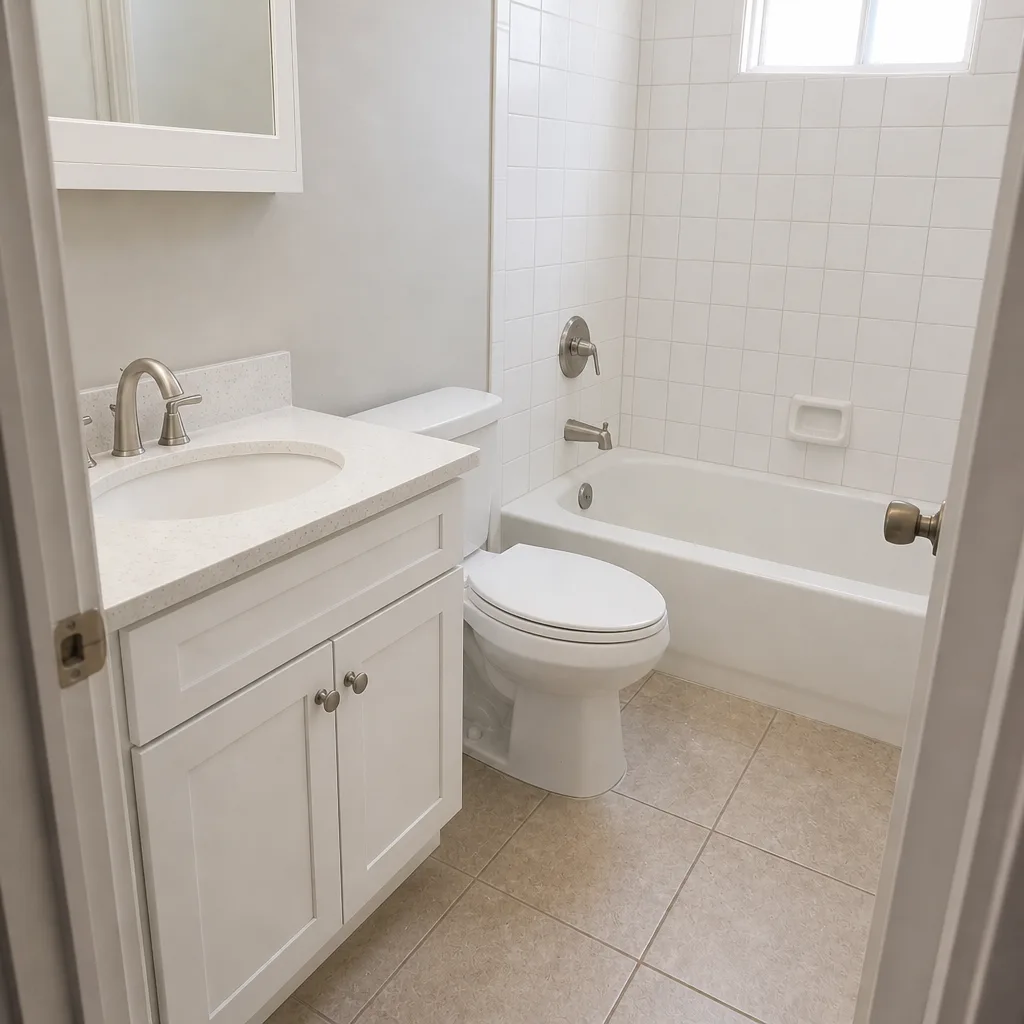
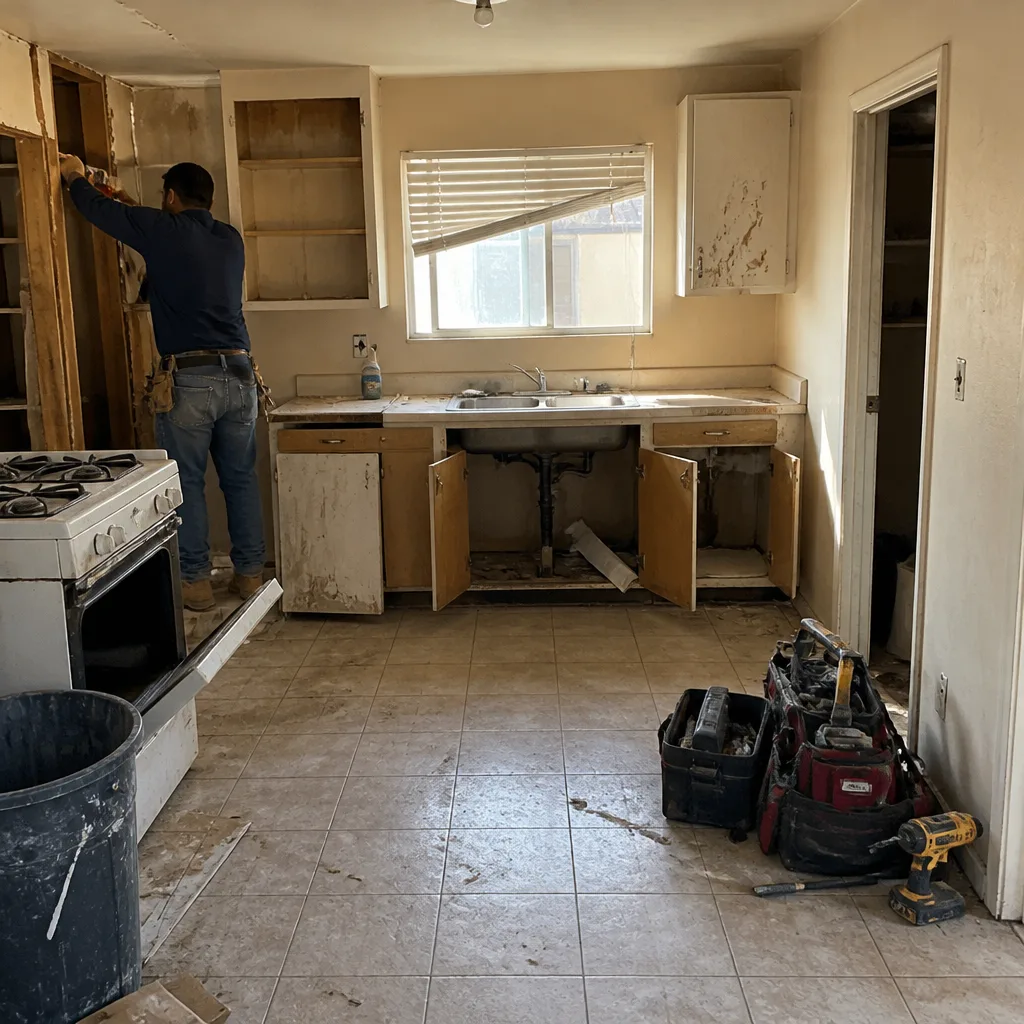
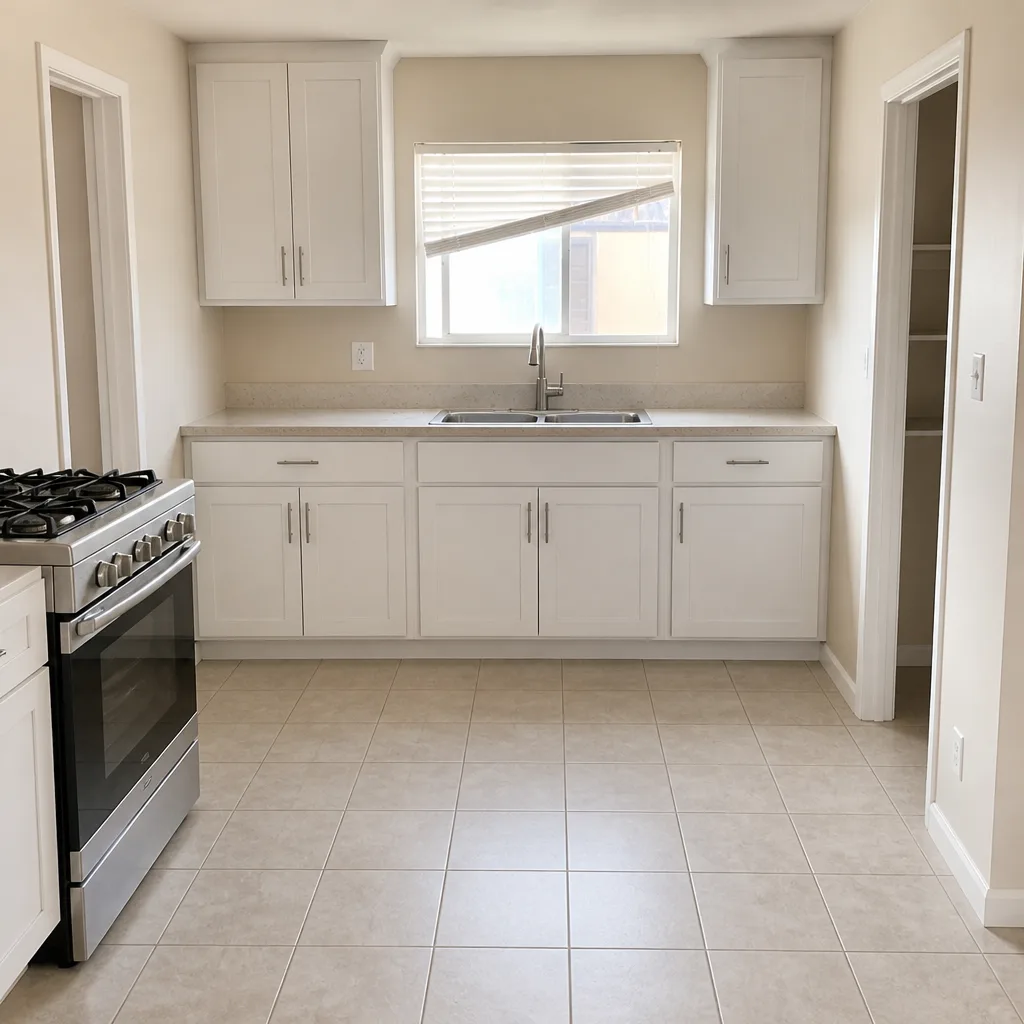
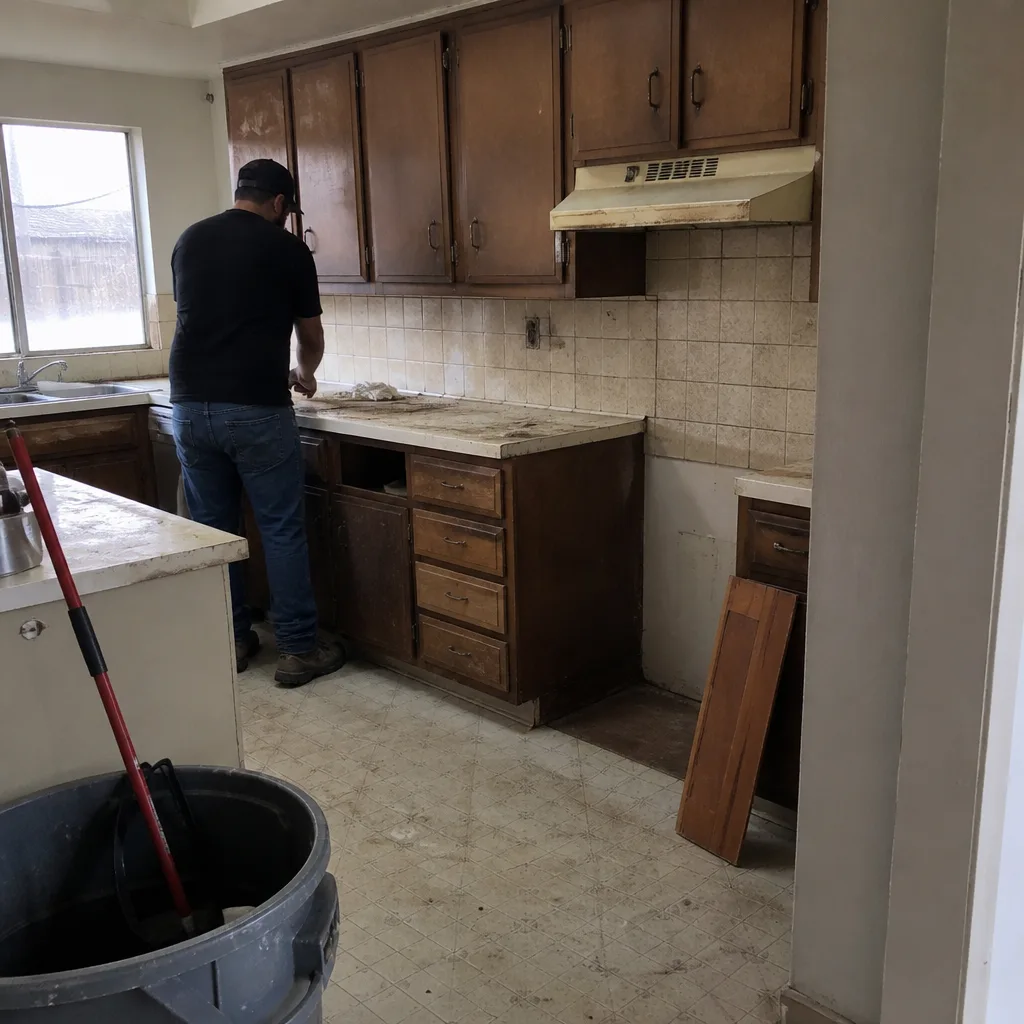
See the difference
 Before
 After
 Before
 After
 Before
 After
Common Mistakes to Avoid
- Treating rocking pavers as a sanding problem. If joints keep emptying after every sweep, the pavers are moving because the base is moving. New sand in the joints looks right for a month and fails the same way. Diagnose the layer first.
- Using film-forming sealer on efflorescence. A glossy acrylic coating can trap moisture inside the paver and push the salt bloom up through the surface. Penetrating silane-siloxane sealers work better in this climate because the paver can still dry.
- Spot-repairing a zone over 10 square feet. It feels cheaper, but once the bedding is out and the base is exposed, the labor is most of a full re-set on that area. Do the whole zone or don’t lift it.
- Skipping the edge restraint. Pavers don’t stay put by friction. The edge system holds the field, and when it fails, the field spreads and the joints pump open. A repair that doesn’t look at edge restraint isn’t complete.
- Laying new pavers over the old base without testing it. Caliche destroys undersized bases from below. If the base wasn’t compacted and drained correctly the first time, it won’t hold a new paver course either.
- Buying the cheapest paver on the shelf for a North Las Vegas driveway. Heat, vehicle load, and drainage all work against a low-strength unit. A paver rated for the load lasts; the cheapest unit usually is not.
- Quoting a repair before looking underneath. No contractor can price a repair without knowing whether the base failed or the joints failed. Anyone who hands over a number without lifting a single paver is guessing.
When to Call a Professional
Some paver situations need a trained eye. If any of these describe your driveway, it’s worth having someone look before you spend money on a fix that may not hold:
- A section larger than 10 square feet dips or flexes.
- Pavers are cracking across a field, or the edge of the driveway is spreading.
- Joints keep emptying even after fresh sand.
- Water pools on the driveway or along its edge after rain.
- Efflorescence keeps returning after cleaning and sealing.
- You’re planning a new install and want the base, spec, and drainage designed correctly the first time.
A real diagnosis takes a base inspection and a written line-item estimate. North Las Vegas Construction offers free estimates in North Las Vegas for this kind of work, and our technicians have up to 11 years of experience reading desert base failures. Call (833) 734-2032 and we’ll walk the driveway with you. We answer 24/7. Fast dispatch from 7am to 7pm, Sunday through Friday.
Frequently Asked Questions
Rocking without cracking usually means the paver is intact and the support underneath it has loosened. In North Las Vegas, that’s typically a settled or uncompacted base, or a pocket of bedding sand that water worked out during a monsoon, especially where caliche under the base stops drainage. A spot repair of the bedding often fixes a small area; a larger zone usually needs the base re-compacted.
No. Efflorescence is salt carried to the surface by moisture moving through the concrete, and it doesn’t mean the paver is failing. In this climate it’s usually pushed from below by a base or drainage problem, not from rain on top. Clean it, fix the moisture source, then seal with a penetrating sealer rather than a film-forming one.
It depends on whether you’re spot-repairing under about 10 square feet or pulling and rebuilding a whole zone, and on whether the base needs re-compaction. Those scopes are priced differently, and we won’t hand over a number before inspecting the base. Call (833) 734-2032 for a free estimate – the written quote shows the line items, not a lump sum.
Repair is usually right when the problem is under about 10 square feet, when the edges are stable, and when a base inspection shows the base is still supporting the field. Replace or re-do the zone when settlement covers a larger area, when multiple zones are failing, or when the edge restraint has given out. Either way, the base decision comes before the paver decision.
Only if the pavers aren’t moving. If they’re rocking or flexing, re-sanding and sealing will look good for a few months and then fail the same way. New joint sand on a moving field gets pumped out again. Fix the base first, then refresh the joints.
Brand matters less than the spec: a load-rated unit from a major maker beats a minimum-spec paver regardless of label. We work with Belgard, Techo-Bloc, Unilock, and Cambridge Pavers because they publish clear ratings and we can match a product to your driveway’s load and look. Call (833) 734-2032 for a free estimate and we’ll talk spec before color.
The Bottom Line
Paver problems in North Las Vegas almost always trace back to one of three root causes: the base, the joint material, or the paver spec. Rocking pavers point to the base or bedding. Cracking points to the base or a wrong spec. Efflorescence points to moisture moving from underneath, which is a drainage and base story, not a surface problem. Diagnose the layer first. Spot-repair under about 10 square feet. Pull the zone above it. And treat any quote that doesn’t mention base inspection as a guess. Get that order right and the repair lasts.
If you’d like a second opinion on your driveway, North Las Vegas Construction offers free estimates across North Las Vegas, with written line-item quotes and product quality specified before the crew arrives. One contractor, every project – from the paver driveway to the fence line, the roof, and the rooms inside.
Call (833) 734-2032 to schedule your free estimate. We answer 24/7. Fast dispatch from 7am to 7pm, Sunday through Friday.
Written by the team at North Las Vegas Construction.