
Last updated November 18, 2026




Free written scope consultation - allowances, timeline, and change-order rules on paper before a single trade is scheduled
How to Hire a Construction Contractor in North Las Vegas: A Step-by-Step Guide
Most homeowners in North Las Vegas think the hard part is picking a price. It isn’t. The hard part is figuring out which of the contractors who quoted you is actually allowed to do the work you’re paying for. Nevada doesn’t hand out one blanket contractor license. It hands out specific classifications, and a license that covers a bathroom remodel doesn’t automatically cover the roof over it. That mismatch is where trouble starts, long before anyone swings a hammer. In this guide, we’ll walk you through how to check a license in under two minutes, what to ask about subcontractors, how to read a bid that hides its material specs, and what a fair North Las Vegas construction contract should contain so you’re protected when the inspection comes.
Quick Answer
To hire a construction contractor in North Las Vegas, verify an active Nevada State Contractors Board license that matches the specific trade and scope of your project, confirm the license covers the classification needed for each part of the job, get a written line-item contract that names materials and brands, and never pay a large cash deposit upfront. A contractor who can’t show you an active, correctly classified license before the contract is signed is a contractor you don’t hire.
Styles & brands we work with
- Kitchen remodeling
- Bathroom remodeling
- Home additions & ADU
- Roofing
- Windows & doors
- Driveway & pavers
- Fence
Table of Contents
- Why your contractor’s license classification matters more than the price
- How to look up an NSCB license in under two minutes
- Questions to ask about subcontractors on your job
- Red flags specific to the North Las Vegas market
- What a legitimate North Las Vegas construction contract must include
- How to compare bids apples-to-apples when the materials differ
- Permits, inspections, and who signs off
- Common mistakes to avoid
- Frequently asked questions
Why Your Contractor’s License Classification Matters More Than the Price
Nevada does not license “contractors” as a single group. It licenses them by classification, and each classification limits what work they can legally perform and what permits they can pull. A contractor holding only a residential license can’t legally pull a roofing permit, which means that contractor isn’t the one who should be on your roof. When a company quotes you a roof job without the right classification, you’re the one exposed if the inspection fails or the work causes a problem later.
Here’s what that means for you in practical terms:
- The classification has to match the scope. General building, residential remodeling, roofing, and masonry are separate categories. A bid that covers a kitchen, a roof, and a block wall should show you which licenses cover each piece.
- Permits are pulled by the license holder for that trade. If your contractor tells you they’ll “handle the permit” but the classification doesn’t cover the work, you can end up with an unpermitted job, a failed inspection, or a stop-work order.
- The license is tied to the company, not just the person who showed up to quote. Ask for the license number and the business name that appears on it, then make sure the name on your contract matches.
- A lower bid from a company without the right classification isn’t cheaper. It’s a bid you may end up paying twice for, once to the wrong contractor and once to the right one after the inspection.
In our experience, the homeowners who get burned in North Las Vegas aren’t the ones who chose a slightly higher bid. They’re the ones who never asked which classification the contractor held before signing. It’s the single most important question on this whole page, and it takes less time to answer than making a cup of coffee.
How to Look Up an NSCB License in Under Two Minutes
The Nevada State Contractors Board maintains a public license lookup you can access from your phone. You should do this for every contractor you’re seriously considering, and you should do it before you sign anything, not after. Here’s the exact process:
- Get the license number in writing. Ask for it in the text, email, or written quote so there’s no confusion later. Get the legal business name that matches the license.
- Search the NSCB database. Enter the license number or business name. The record will show the license status and classification.
- Read the status carefully. “Active” means the contractor is currently licensed and in good standing with the board. “Inactive” means the license isn’t current, so the contractor shouldn’t be taking new work. “Suspended” or “revoked” means the board has taken disciplinary action, and you should walk away.
- Check the classification list. The record shows which classifications are attached to the license. Match those against your actual job. A roofing classification is required for roof work; a masonry classification is required for block walls and some hardscape; general and residential classifications don’t automatically cover those trades.
- Confirm the business name matches. The name on the license must match the name on your contract. If it doesn’t, ask why before you sign.
That’s the whole check. Two minutes, one search. If a contractor gets nervous when you ask for their license number, that’s your answer, and you can skip the rest of this guide. For a larger project that spans multiple trades, such as driveway & pavers work plus a new roof, you should verify a separate classification for each scope item rather than a single license that claims to cover everything.
Questions to Ask About Subcontractors on Your Job
Most residential construction work involves subcontractors, and that’s normal. The problem is when the person signing your contract can’t tell you who’s actually doing the work, who’s pulling the permits, or whose insurance covers each trade. Before you sign, get clear answers to these questions in writing:
- Who pulls the permit for each trade? The person holding the license for that trade should be the one on the permit. If a general contractor is pulling a roofing permit, ask to see the roofing classification.
- Who is on-site daily? Ask whether the project manager, the lead installer, or the owner will be there day to day. A responsible person should be reachable on the job, not just during a single meeting.
- Whose insurance covers each trade? Your contractor’s general liability should cover the work, but subcontractors should have their own coverage. Ask for certificates of insurance that list the project address and match the work being done.
- Do the subcontractors hold their own licenses? In Nevada, subcontractors need their own valid licenses for their trades. Ask for those license numbers too, and check them the same way you checked the primary contractor.
- What happens if a subcontractor’s work fails inspection? Get a clear answer about who pays for the correction and who is responsible for the re-inspection.
Nevada contractors are required to provide a written disclosure about whether they use subcontractors on your project before signing, and you should read that disclosure carefully. If a bid package arrives without it, ask for it. If a contractor can’t explain who’s doing what, that’s a sign the project is being built out of verbal promises rather than a clear plan. When you’re looking at a single-source relationship, as with a home additions & ADU project, the contractor should be able to map each trade to a licensed party before work starts.
Red Flags Specific to the North Las Vegas Market
North Las Vegas has a construction market that spikes with permit season. When the valley is busy, unlicensed operators surface to catch the overflow, and they’re better than ever at sounding legitimate. Watch for these specific signals:
- A quote without a visit. A contractor who quotes a kitchen remodel or a new roof from photos or over the phone is guessing. Every material and labor number on that bid is fiction, and you’ll find out at the first invoicing.
- Bids that exclude permit fees. A bid that doesn’t list permits and inspections as a line item is hiding costs you’ll pay later. Ask for permit fees itemized and explained.
- Pressure to pay cash upfront. A large cash deposit gives you no paper trail and no protection. Legitimate construction contracts use scheduled payments tied to milestones, not cash in hand on day one.
- No physical business address. Ask where the company operates from and check the address. A contractor who only meets in parking lots isn’t a contractor you want holding a deposit.
- No written contract at all. Nevada requires a written contract for residential projects over a certain dollar threshold. If the person quoting you keeps saying “we’ll get it in writing later,” they’re telling you the whole plan is verbal.
- Rushed timelines with no inspection milestones. A project that can’t show inspection checkpoints doesn’t have a schedule. It has an estimate of how long the crew might be there.
In our experience, the strongest red flags aren’t about price at all. They’re about how the contractor reacts when you ask for a license number, a written contract, or a permit line item. A real contractor answers those questions the same way they answer questions about materials: with specifics.
What a Legitimate North Las Vegas Construction Contract Must Include
A residential construction contract in North Las Vegas should go far beyond a one-page agreement with a total price and a signature line. The boilerplate matters less than the specifics. Make sure the contract includes each of these:
- The full scope of work, room by room or phase by phase. Every install, repair, and replacement should be named. Vague language like “update kitchen” is not a scope.
- Material specifications with brand names. “Tile” is not a spec. “Cambria quartz countertop” and “Daltile floor tile in the specified line” are specs. The brand should be named so the bid is tied to an actual product.
- A permit and inspection line item. Permits and inspections should be priced and listed, not buried or excluded. The contract should state who pulls each permit.
- A lien waiver schedule. This protects you from subcontractors or suppliers who haven’t been paid filing a lien against your property. Ask how the contractor handles lien waivers at each payment milestone, and get those waivers in writing before final payment.
- Payment tied to inspection milestones. Your payments should be scheduled against verifiable progress and inspection sign-offs, not against the calendar. A deposit is normal; a large cash upfront payment is not.
- A written warranty term. Ask what’s covered, for how long, and what voids the warranty. The answer should appear in the contract, not just in conversation.
- A change order process. Ask how changes to the scope are priced and approved in writing. The process should be spelled out before work begins.
A contract that covers each of these items is one you can defend in a dispute. A contract that lists only a total price leaves you with nothing but a promise. Before work starts, we recommend you ask for the contract at the same time as the bid. The two documents should match, and a contractor who sends them separately is telling you something about how the job will be run.
How to Compare Bids Apples-to-Apples When the Materials Differ
A lower bid with generic materials is not a lower bid. It’s a different project. The most common mistake homeowners make is comparing totals instead of comparing product specifications, and that’s where honest comparisons fall apart.
Here’s the comparison we walk homeowners through before they decide:
- Roofing. A bid using generic builder shingles and a bid using GAF or CertainTeed architectural or designer shingles are not equivalent. Both are roofs. One will meet the code minimum and one will last a specific number of years. Ask for the manufacturer name and product line in writing.
- Countertops. Generic quartz and a Cambria or Silestone slab are different products with different warranties. The brand should be on the bid.
- Cabinetry. KraftMaid and a contractor-built cabinet both hold plates. They don’t hold them the same way, and they don’t have the same warranty. Ask for the manufacturer and the warranty term on the bid.
- Pavers and hardscape. A standard concrete slab and a Belgard or Techo-Bloc paver system are different installations with different base preparations. The base spec matters as much as the surface product.
- Windows and doors. A window bid that names a manufacturer line can be compared to another window bid that names a line. A window bid that just says “vinyl windows” cannot.
To compare bids fairly, write the material spec for each line item on a single page and ask each contractor to fill in the product they’re using. Where the product differs, ask what the difference costs and why. Where a bid can’t produce a product name, treat that line as unknown rather than as a cheaper option. When you compare a branded bid against an unlabeled one, you’re often seeing the gap between a product that’s built to code and built to last and a product that just meets code.
This is where that single-source model helps. We specify the brand before the crew arrives, and the brand on the bid is the brand on the invoice.
Permits, Inspections, and Who Signs Off
A permit is not a formality. It’s the mechanism that puts an independent inspector between the work and your home. When a permit is pulled correctly, the inspection record becomes your proof that the work met code. When it’s skipped, or pulled under the wrong license classification, you’re left holding the consequence.
Here’s how a well-run permit process should go in North Las Vegas:
- The license holder for the trade pulls the permit. Roofing work requires a roofing classification. Plumbing and electrical work require their own licenses. General construction doesn’t automatically cover those trades.
- Permits and inspections are line items in the contract. You should see them priced and scheduled, not added later as an invoice surprise.
- The contractor schedules inspections at defined milestones. Your payments should tie to those milestones so the work and the money move together.
- The final inspection passes before final payment. That’s the sequence. Not the other way around.
Make sure the contract states which licenses cover which parts of the work, and make sure the permit record matches the names on your contract. If a contractor can’t tell you who’s pulling the permit for each trade, ask why. The answer usually explains everything.
Common Mistakes to Avoid
- Choosing a bid before checking a license. Verify the NSCB license status and classification for every trade on the job before you compare prices. A cheaper bid from an unlicensed contractor is not a bid you can use.
- Comparing totals instead of specs. A bid with generic materials is not equivalent to one with named brands. Put the product specs side by side, and compare the actual products, not just the bottom line.
- Signing a contract without a lien waiver schedule. If a subcontractor isn’t paid, they can file a lien against your property even if you paid the main contractor. Get the lien waiver process in writing before work begins.
- Paying in cash upfront. Schedule payments against inspection milestones and written progress, not against a handshake. Cash leaves no record and no recourse.
- Hiring a contractor who quotes without visiting the site. A quote made from photos is a guess, and the guesses show up as change orders once the crew is on-site.
- Accepting a “we’ll get the contract to you later” answer. A written contract that names the scope, materials, licenses, permits, and payment schedule should exist before any work starts.
- Skipping the subcontractor questions. Ask who’s on-site daily, whose insurance covers each trade, and who pulls each permit. Get the answers in writing.
See the difference
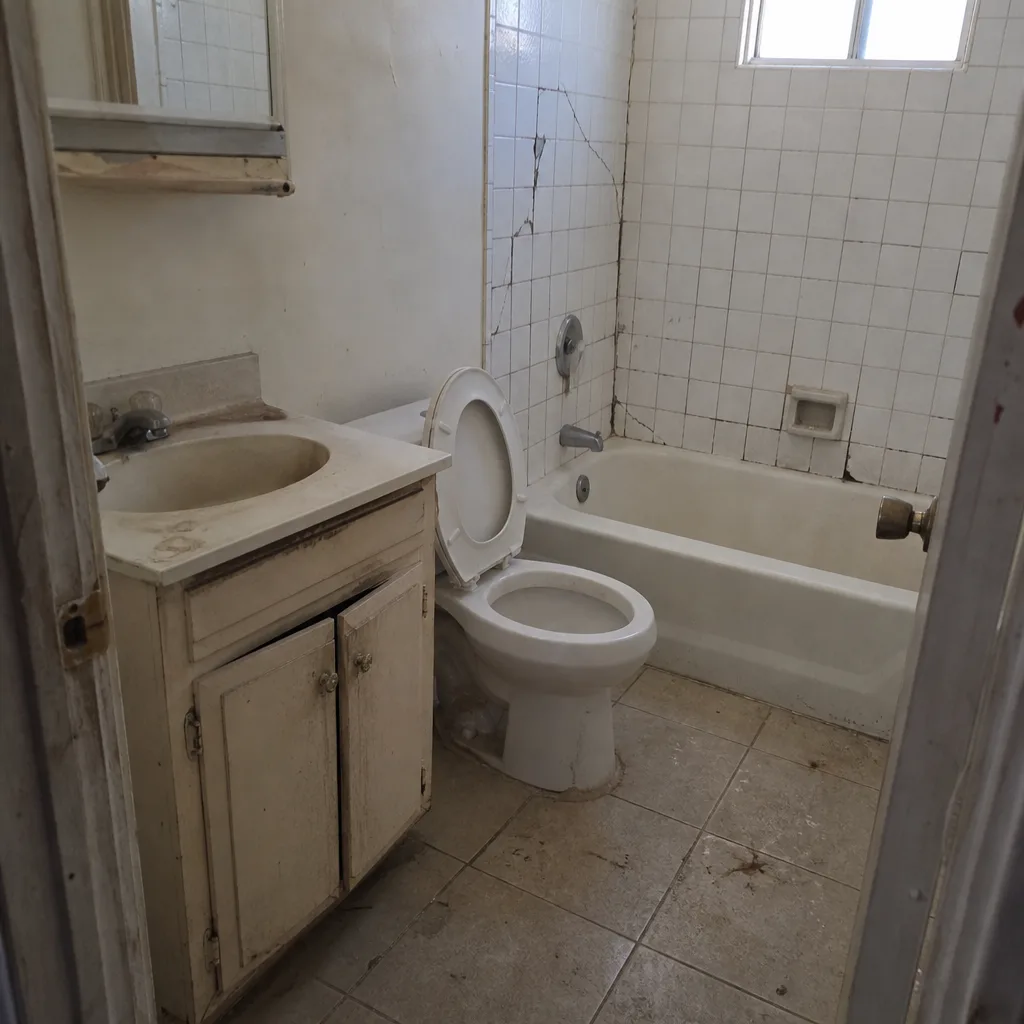 Before
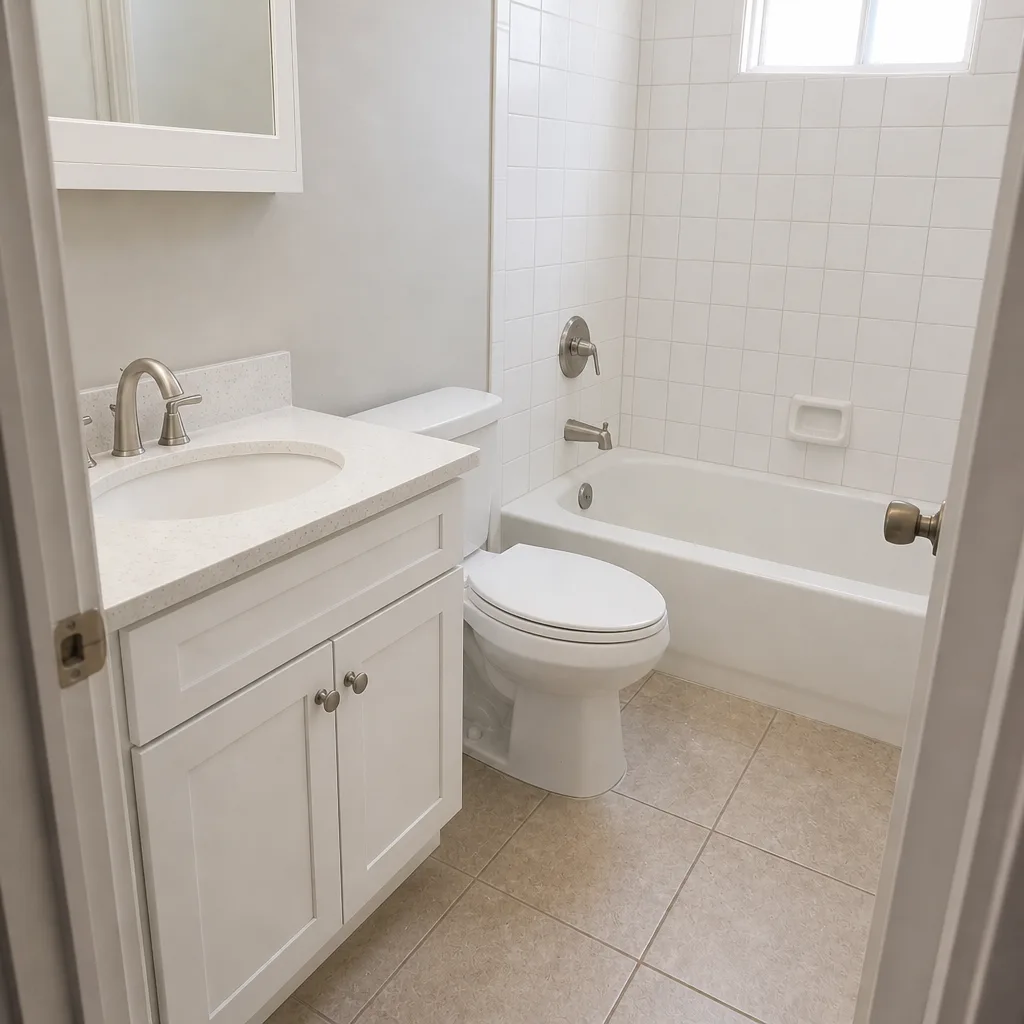 After
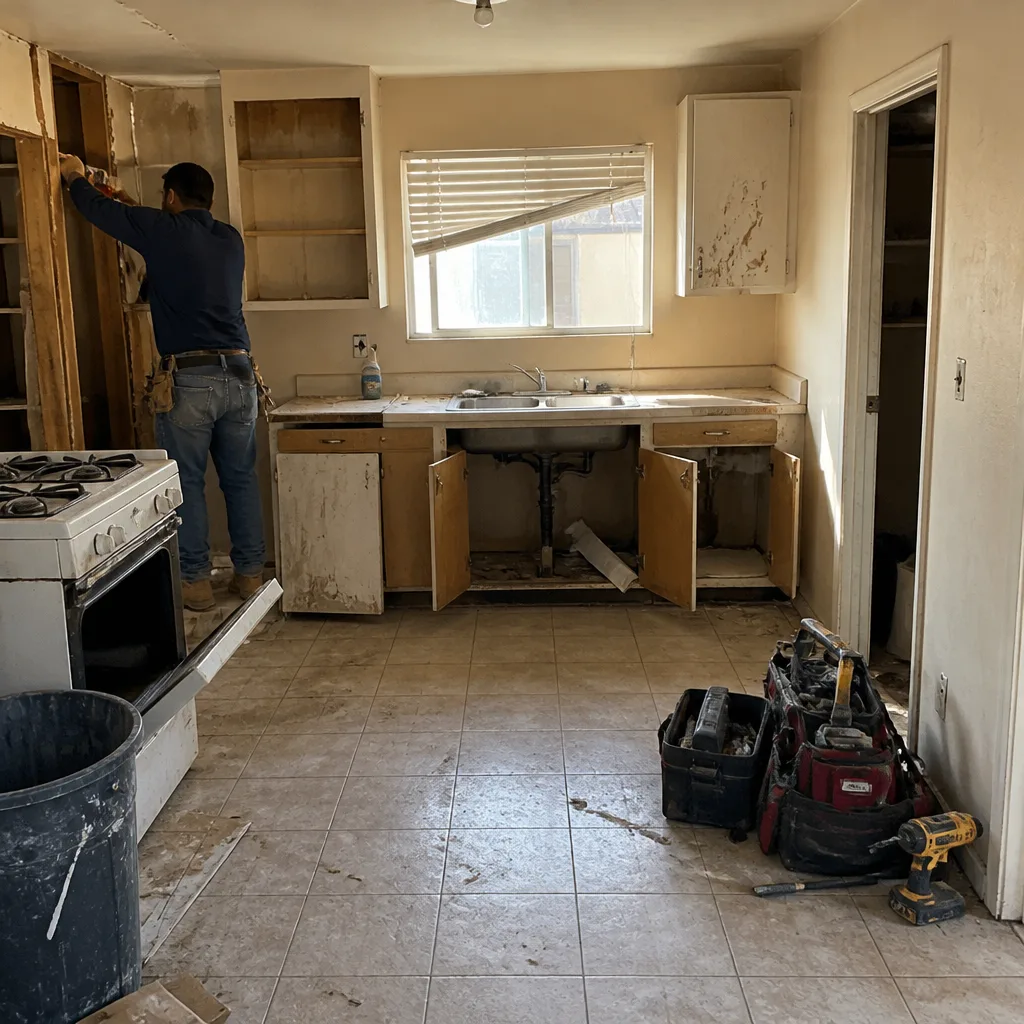 Before
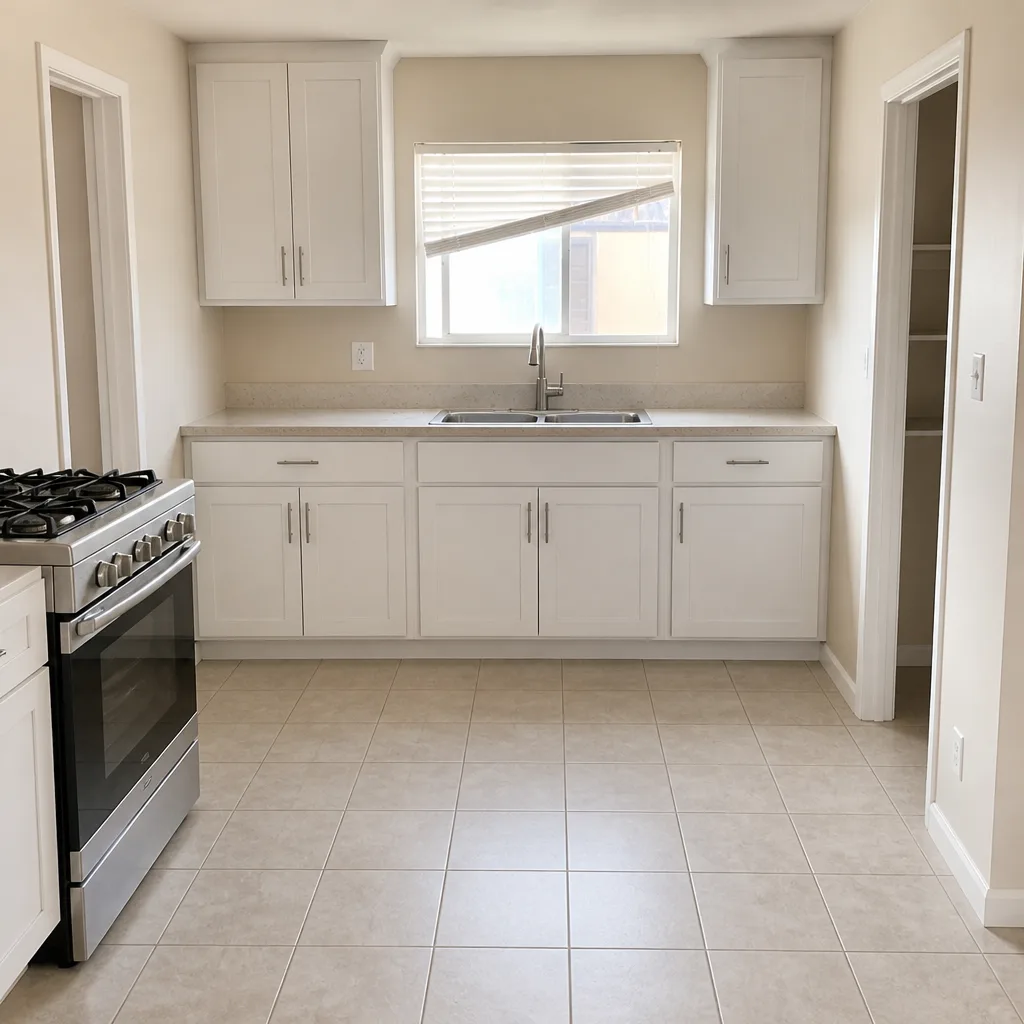 After
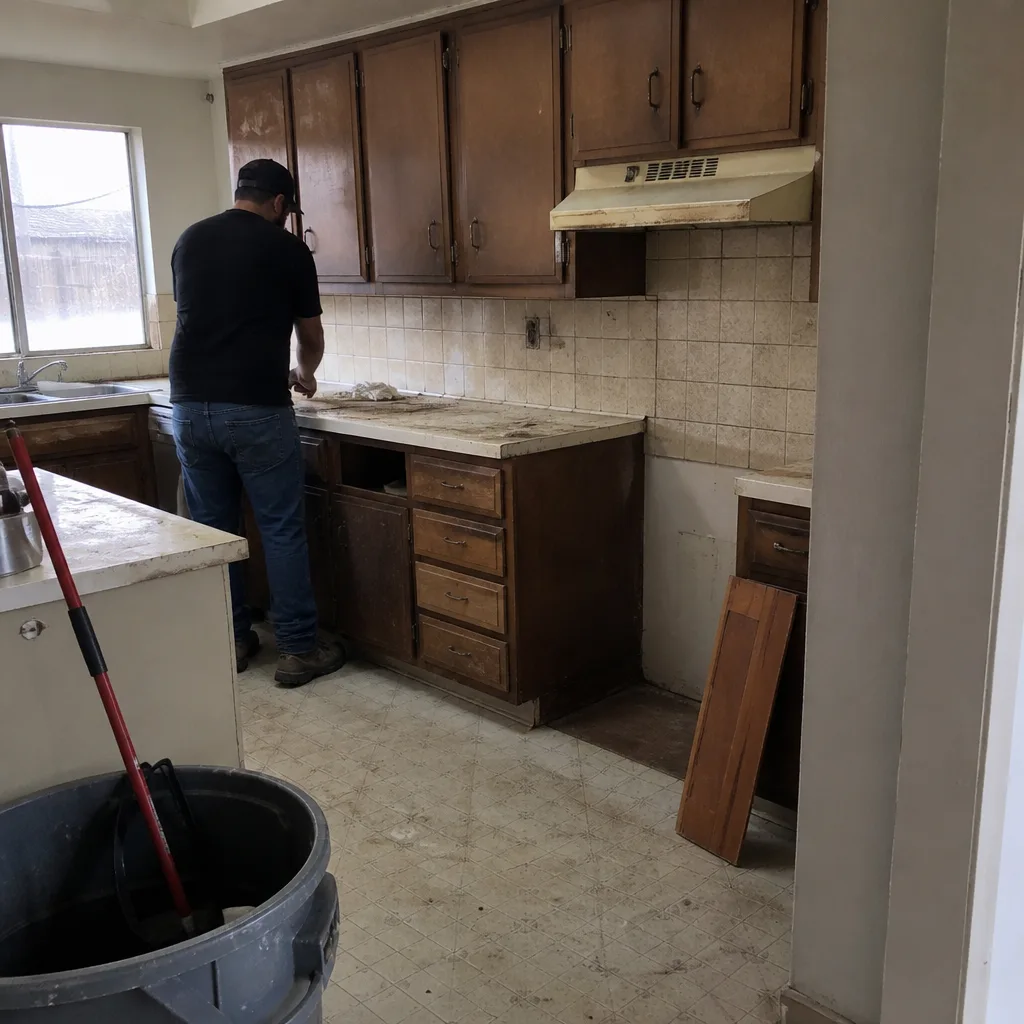 Before
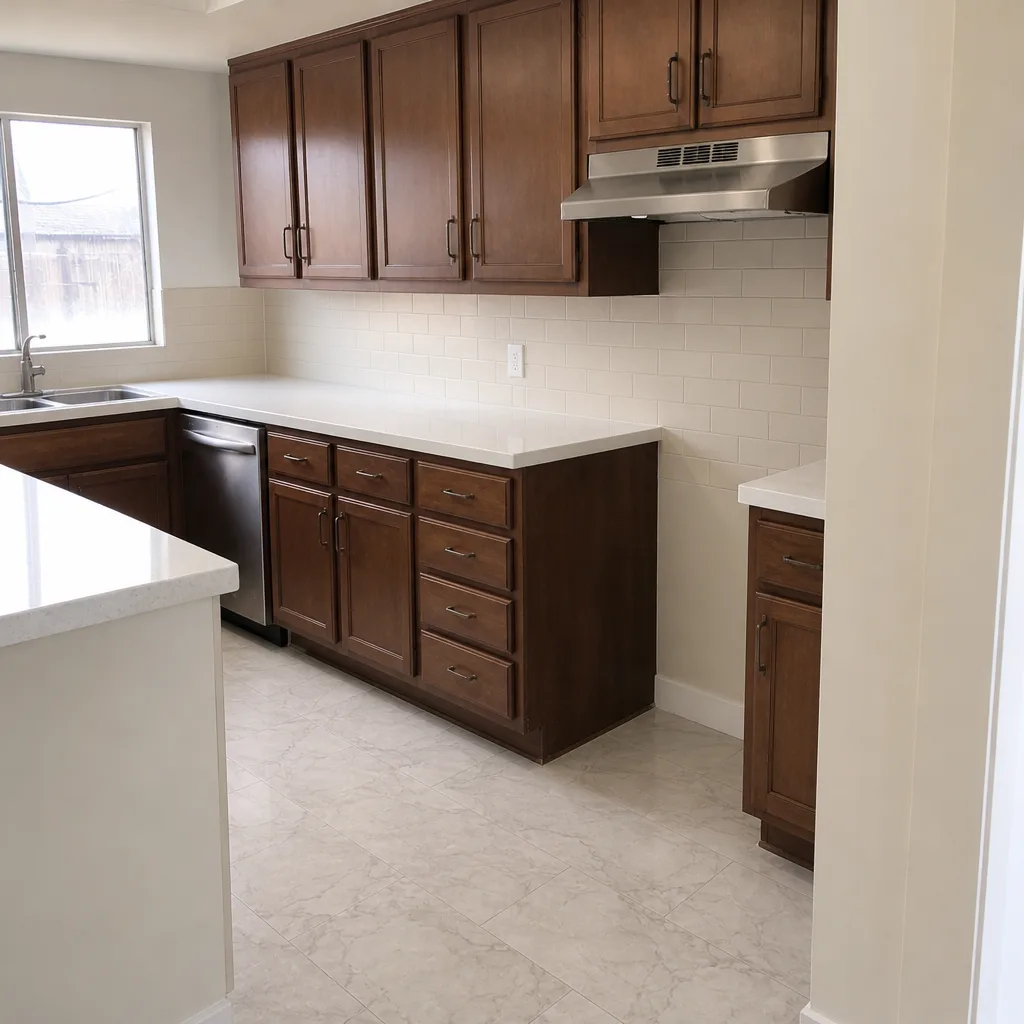 After
When to Call a Professional

Some projects are clear calls for a licensed professional: anything structural, anything that requires a permit, anything involving roofing or electrical, and anything where a failed inspection would leave you exposed. Kitchen and bathroom remodels, home additions, new roofs, windows and doors, and paver driveways all fall into that category in North Las Vegas. The permit and inspection process alone is reason to use a licensed contractor, and the material specs are worth getting right before you order anything.
North Las Vegas Construction offers free estimates in North Las Vegas, and our technicians have up to 11 years of experience. We work across seven trade categories and specify the brand before the crew arrives. Call (833) 734-2032 to schedule your free estimate. We answer 24/7, and fast dispatch runs from 7am to 7pm, Sunday through Friday.
Frequently Asked Questions
Look up the contractor’s license number in the Nevada State Contractors Board public database and confirm the license status is active and the classification matches your project’s scope. Get the license number and the legal business name in writing, then verify both against the record before you sign anything. Call (833) 734-2032 if you want help understanding which classifications your project requires.
An active license means the contractor is currently licensed and in good standing. An inactive license means the license isn’t current and shouldn’t be used to take new work. A suspended or revoked license means the board has taken disciplinary action, which is a clear signal to walk away. If you’re not sure how to read a status, call (833) 734-2032 and we’ll walk you through it.
Yes. Nevada requires a roofing classification for roofing work, and a general or residential license does not automatically cover it. If the contractor quoting your roof can’t show the roofing classification, they’re not the right contractor for the job. Call (833) 734-2032 to schedule a free estimate.
Not if you have a written contract with material specifications and a change order process. A bid that names the brand and the scope leaves less room for a surprise invoice. Ask for the change order process in writing before work begins. Call (833) 734-2032 to schedule your free estimate.
Put the product specifications side by side line by line and ask each contractor to name the manufacturer and product line for each scope item. A bid using generic tile and a bid using Daltile or a comparable named line are not equivalent, even if the total is similar. The written estimate should state the brand. Call (833) 734-2032 for a free estimate with the specs spelled out.
Ask who pulls the permit for each trade, who is on-site daily, whose insurance covers each trade, and whether the subcontractors hold their own licenses. Get those answers in writing. When a contractor can map each trade to a licensed party, the project is built on a plan rather than a promise. Call (833) 734-2032 to schedule your free estimate.
The Bottom Line
Hiring a construction contractor in North Las Vegas is a vetting problem, not a price problem. The license classification is the first thing to check and the last thing most homeowners think to ask about. Get the NSCB license number, verify the status, and confirm the classification matches each trade on the job. Ask about subcontractors, get the permit line item in writing, and insist on a lien waiver schedule. Then compare bids by product spec, not by total, because a bid that can’t name a brand isn’t a bid you can compare. Get the contract and the bid at the same time, and don’t hand over cash. Call (833) 734-2032 for a free estimate, or explore our fence installation and full residential construction services across North Las Vegas through North Las Vegas Construction. We answer 24/7, with fast dispatch from 7am to 7pm, Sunday through Friday.
Written by the team at North Las Vegas Construction.