Last updated November 18, 2026
Free written scope consultation - allowances, timeline, and change-order rules on paper before a single trade is scheduled
The Complete Driveway & Pavers Guide for North Las Vegas Homeowners
Most paver guides you’ll find online recommend a 4-inch compacted base, and in most of the country that number works. In North Las Vegas it doesn’t. The ground under your driveway here is a different material than what those guides were written for, and it behaves differently through a summer that pushes surface temperatures well past what the air reads. A base that’s too shallow, a paver that’s too soft, joint sand that breaks down under UV, and edge restraint that can’t hold into hard soil all fail in the same place: your driveway starts to rock at the corners within a couple of summers. This guide is written for the specific ground, heat, and permitting realities of North Las Vegas. By the end you’ll know how to evaluate caliche on your lot, which paver densities actually survive here, what joint sand holds up, how edge restraint really works, and what triggers a Clark County permit review.
Quick Answer
Driveway pavers in North Las Vegas need a 6- to 8-inch compacted aggregate base over the native caliche, pavers rated at 8,000 psi or higher, a polymeric joint sand built for high-UV environments, and a metal edge restraint anchored deeper than spike-in plastic. Caliche soil expands and contracts with moisture swings, and summer surface temperatures are brutal on soft pavers and cheap sand, so base depth and material density aren’t preferences here. They’re the difference between a driveway that lasts decades and one that shifts after the first hard summer.
Styles & brands we work with
- Kitchen remodeling
- Bathroom remodeling
- Home additions & ADU
- Roofing
- Windows & doors
- Driveway & pavers
- Fence
Table of Contents
- Why Caliche Soil Changes Everything About Base Depth
- How to Identify Caliche on Your Lot Before Demo Begins
- Paver Density: Why 8,000+ PSI Matters in Mojave Heat
- Polymeric Sand for High-UV Environments
- Edge Restraint Systems That Hold in Caliche
- Clark County Permitting: Replacement vs. New Apron
- What Driveway Pavers Cost in North Las Vegas
- How a Paver Driveway Installation Actually Goes
- Common Mistakes to Avoid
- When to Call a Professional
If you’re comparing material options before going deeper, our driveway & pavers page covers what we install and how we specify the brands.
Why Caliche Soil Changes Everything About Base Depth
Caliche is a layer of calcium carbonate that forms in desert soils when water carries dissolved minerals downward and they precipitate out as a cemented horizon. In North Las Vegas, that layer is often close to the surface and it doesn’t behave like ordinary dirt. It’s hard when dry, and it can heave and shift when it takes on moisture, then crack as it dries back out. A driveway base sitting on top of an unstable caliche layer is only as stable as the layer below it.
National guides written for clay, sand, or loam call for 4 inches of compacted base because that’s what those soils need to distribute load. Caliche needs more. Six to eight inches of compacted aggregate gives you a real separation between the pavement and the reactive native soil, and it lets us build in lifts so each layer compacts to real density instead of trapping voids. Compaction also has to be done in stages, not one pass over a thick lift, because a single thick layer compacts on top and stays loose underneath.
What that means practically:
- Base depth: 6 to 8 inches of compacted aggregate, not 4.
- Compaction in lifts: typically 2- to 3-inch layers, each compacted before the next goes down.
- Subgrade prep: removing or scarifying the top of the caliche and re-compacting it before any base goes down.
- Drainage grading: slope away from the garage and any structures so water doesn’t sit on the subgrade and reactivate the soil.
North Las Vegas sits at the edge of the Mojave, so the moisture swings that trigger caliche movement aren’t hypothetical. Summer monsoon rain followed by dry heat is exactly the cycle that turns a shallow base into a rocking driveway. Getting the base right is the single biggest thing that separates a long-lived installation from a temporary one, and it’s the reason we specify material and thickness before a single paver is ordered.
How to Identify Caliche on Your Lot Before Demo Begins
You can get a working read on your soil before demolition starts, and doing it early saves the cost of discovering it mid-job. Look for these signs:
- Whitish crusting or nodules in exposed soil. Caliche often shows as pale, cemented patches or gravel-like nodules where soil has been cut or graded.
- Water that ponds and won’t drain. A hard cemented layer under the surface keeps water from soaking in, so puddles hang around long after neighbors’ yards have dried.
- Digging resistance. A shovel that hits a layer it can’t easily penetrate, often a foot or two down, is a strong indicator.
- Existing flatwork cracking in patterns. Old concrete that’s cracked in irregular patches, especially near edges and aprons, can point to a reactive subgrade.
- Test pits during the bid. A contractor should confirm what’s under the driveway with an actual excavation before quoting, not after materials are delivered.
We dig test pits on every driveway replacement we quote. It’s a modest amount of work up front, and it tells us how much caliche removal or scarification the job needs before we can put real numbers in a written estimate. In North Las Vegas, where a lot’s grading history can be very different from the one next door, that step matters more than it does in wetter climates where soil is more consistent.
Paver Density: Why 8,000+ PSI Matters in Mojave Heat
Paver strength is measured in compressive strength, usually expressed in psi, and in this climate it’s the number that predicts longevity. A paver rated at 8,000 psi or higher resists the micro-cracking that heat cycling causes, while softer decorative-grade pavers can start showing surface spalls and edge breakdown after a few summers of thermal expansion and contraction. North Las Vegas pavers take on daily temperature swings that are far wider than those in the wetter regions most paver literature is written for.
What that looks like in practice:
- High-density pavers (8,000+ psi): less moisture absorption, better freeze-thaw and heat-cycle performance, tighter color retention.
- Standard and decorative-grade pavers: fine for cool, wet regions, but more prone to spalling and surface wear under intense UV and heat cycling.
- Color selection: lighter tones reflect more heat and fade less visibly over time, an actual performance choice in this climate.
This is where brand really matters. Belgard and Unilock both make engineered paver systems with documented density ratings, and both offer units designed for heavy residential driveways rather than purely decorative walls and paths. We specify those products for the driveway and the right unit for the walkway, because a driveway takes vehicle loads that a patio never will. Choosing paver density before the crew arrives is what keeps a North Las Vegas driveway from becoming a surface you’re patching in five years.
Polymeric Sand for High-UV Environments
Joint sand is the most underrated ingredient in a paver driveway, and in North Las Vegas it’s the first thing to fail on a cheap install. Standard sand washes out, weeds move in, and in high-UV climates some polymeric sands break down or de-granulate from sun exposure and heat cycling. When the joints open, pavers move, and once pavers move the base is exposed to everything the desert throws at it.
A joint sand built for high-UV environments is what holds the system together. We use Techniseal HP+ for the joints because it’s formulated to hold up under intense sun and stabilized temperature swings, and it cures hard enough to resist washout while staying flexible enough to move with the pavement. Cheaper alternatives may look fine at first, but a summer or two of direct sun can leave them crumbling out of the joints.
A few things that actually matter when it’s specified:
- UV stability: the sand should be rated for high-sun regions, not just “polymeric.”
- Joint depth and width: the sand needs the manufacturer’s recommended joint depth to lock in, so the pavers should be laid with that in mind.
- Application conditions: the sand has to be applied and cured properly, which means working within the manufacturer’s temperature and moisture guidance.
- Coverage: every joint gets filled and vibrated into place, not just swept over the surface.
This is where the difference between a decent install and a cheap one shows up first, and it’s why we specify the joint material as part of the job, not as an optional upgrade. If the hardscape scope grows to include the rest of the property envelope, we coordinate it alongside the rest of the work so the same standard of material selection carries through.
Edge Restraint Systems That Hold in Caliche
The edge of a paver driveway is where most failures start, and in caliche the failure mode is specific. Plastic edge restraints held by driven spikes rely on soil friction to stay put. In hard, cemented caliche the spikes can refuse to go in deep enough, or the material can crack and let the restraint shift under load. When the edge gives, the pavers spread, the joints open, and the whole system loosens from the outside in.
Metal edge restraint systems with deeper anchoring are what hold in this soil. They’re less forgiving to install, but they don’t creep the way plastic can, and they keep the perimeter of the driveway locked against the lateral forces of vehicle loads and thermal expansion. On a North Las Vegas driveway, that perimeter lock is worth more than a few dollars of material savings.
What we look for at the edge:
- Metal restraints rather than plastic spike-in systems where the soil demands it.
- Deeper anchoring concrete-set or long-pinned, sized to the load the driveway will take.
- A continuous perimeter that ties into the base, not just the surface course.
- Clean transitions at the garage apron, the sidewalk, and any gate or fence line the driveway meets.
Edges also get more of the sun exposure and thermal stress than the interior of the driveway, so they’re the first place a weak restraint shows. If your property line ends at a fence, the driveway edge and the fence installation are worth planning together so the two don’t fight each other for footing.
Clark County Permitting: Replacement vs. New Apron
Whether you need a permit for your driveway work in Clark County depends on what’s changing, not just on the pavement material. Replacing pavers or concrete in kind, within the existing footprint, is a very different process from adding a new driveway apron, widening the approach, or changing where the driveway meets the street. The apron area, where the driveway crosses the public right-of-way, is often the trigger for engineering review.
The safe rule is to ask your city’s building department what applies to your specific lot before work begins, and to make sure the contractor confirms it in the written scope. What typically drives the question:
- In-kind replacement: same footprint, same dimensions, existing curb cut. Often simpler, but confirm locally.
- New apron or widened approach: any change to how the driveway crosses the right-of-way, which is where engineering review tends to come in.
- Grading and drainage changes: alterations that affect how water leaves the lot or reaches the street.
- Structural changes: anything that adds load or alters the base in a way engineering needs to evaluate.
Getting this wrong is expensive in time and rework. Permits pulled and inspections passed are part of how we quote the job in North Las Vegas, and we put that in writing so you’re not discovering the permitting requirement after the old driveway’s already gone. If the project is part of a larger plan that includes an addition or a new accessory unit, the home additions & ADU scope should be reviewed for site access and grading impacts at the same time.
What Driveway Pavers Cost in North Las Vegas
Typical paver driveway installations in North Las Vegas run in a wide range depending on square footage, base work, paver line, and whether caliche removal or major grading is involved. The written estimate sets your final price, so what follows is a general way to think about where the money goes rather than a quote.
- Base preparation and caliche removal: the biggest variable, and the one most national guides leave out. Deeper base and caliche handling add cost, and skipping them adds failure risk.
- Paver selection: engineered lines from Belgard or Unilock sit above basic decorative grades, and density and finish are part of what you’re paying for.
- Joint sand and edge restraint: high-UV polymeric sand and metal restraint are part of a complete system, not extras.
- Permitting: varies with the scope, and a new apron or a widened approach is a different job than in-kind replacement.
- Site access and demolition: how much old material has to come out and how easily equipment can reach the work area.
Our position on pricing is that the estimate is free and the price is set per job in writing. We’d rather give you a written line-item quote that reflects your actual soil and access than a number pulled from a per-square-foot rule of thumb that doesn’t account for caliche. If you’re still deciding on materials, our driveway & pavers service page shows the brands we work with and what a project typically includes.
How a Paver Driveway Installation Actually Goes
A proper driveway replacement in North Las Vegas follows a sequence, and the order matters as much as the materials. Here’s how a typical job runs:
- Site review and test pits. Confirm soil conditions, access, drainage paths, and what’s under the current surface before anything is demolished.
- Demolition and haul-off. Remove the old concrete or pavers and the base material that won’t perform, then check the subgrade.
- Subgrade prep. Scarify or remove the reactive caliche, re-grade for drainage, and compact.
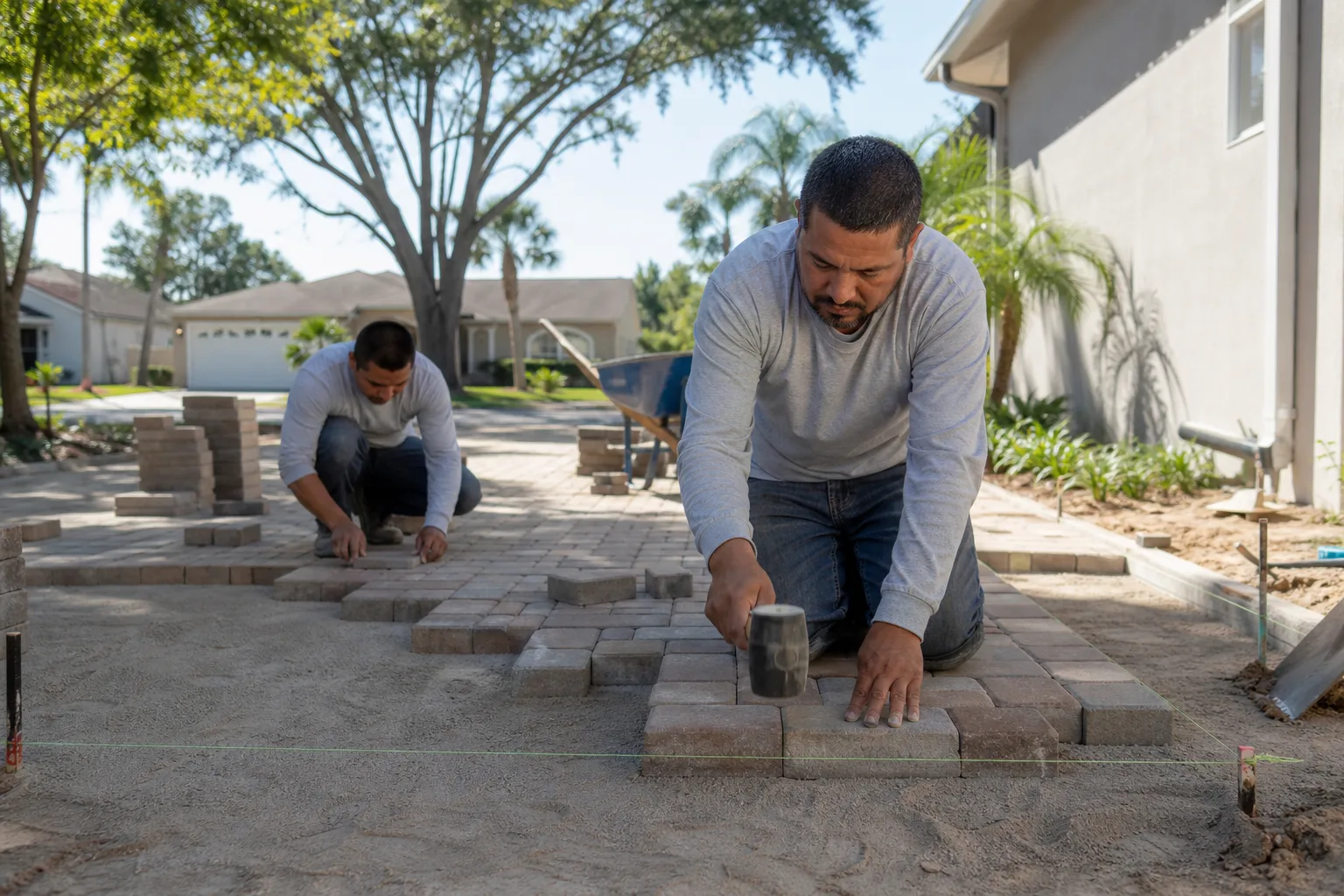
- Base install in lifts. Place and compact the aggregate in 2- to 3-inch layers until you reach the specified depth, usually 6 to 8 inches here.
- Edge restraint. Set the metal perimeter restraint and anchor it into the base.
- Bedding layer and paving. Screed the bedding course and set the pavers in the pattern you selected.
- Cutting and detailing. Cut and fit at edges, corners, and the apron transition.
- Joint sand and compaction. Sweep in the high-UV polymeric sand, vibrate it into the joints, and cure per the product instructions.
- Final walkthrough. Check drainage, edges, and finish, and confirm any required inspections are handled.
The whole job usually turns on base prep and drying time, not on how fast the pavers can be laid. If the project is part of a broader property upgrade, coordinating the driveway with the rest of the scope through North Las Vegas Construction keeps the same material standards and one point of responsibility across the property.
Common Mistakes to Avoid
- Using the 4-inch base rule from national guides. That number exists for soils that aren’t caliche. In North Las Vegas, 4 inches is too shallow for a driveway, and the result is rocking and joint failure within a few summers.
- Quoting before digging a test pit. A price that doesn’t account for what’s under the driveway isn’t a real price. Ask how the contractor is evaluating your soil, and expect an answer.
- Buying on price per square foot alone. Decorative-grade pavers and cheap joint sand look like savings until the surface spalls and the joints wash out under Mojave sun and heat cycling.
- Skipping the metal edge restraint. Plastic spike-in restraint is where a lot of North Las Vegas driveways start coming apart. The edge needs deeper anchoring in this soil.
- Ignoring drainage grading. A base that traps water against the caliche shortens the life of the whole installation. The surface should shed water away from the garage and structures.
- Assuming a driveway is a driveway when it comes to permits. A new apron or widened approach and an in-kind replacement are different projects on paper, and Clark County’s requirements should be confirmed before demo.
- Not planning the driveway and fence line together. Footings, restraints, and grading at the property edge affect each other, and separating the two scopes can create a weak spot at the perimeter.
When to Call a Professional
Not every driveway problem needs a full replacement, but several situations genuinely call for a professional assessment. If your pavers are rocking or the joints are opening up, the cause is usually below the surface, and repointing the joints won’t fix it. If you’re replacing concrete with pavers, changing the footprint, widening the approach, or building a new apron, the base, drainage, and permitting decisions are the ones that determine whether the project lasts. Caliche handling, compaction in lifts, and edge restraint are heavy work with real consequence for the finished driveway.
North Las Vegas Construction offers free estimates in North Las Vegas, with a written line-item quote that reflects your actual soil and access. Call (833) 734-2032. We answer 24/7. Fast dispatch from 7am to 7pm, Sunday through Friday.
See the difference
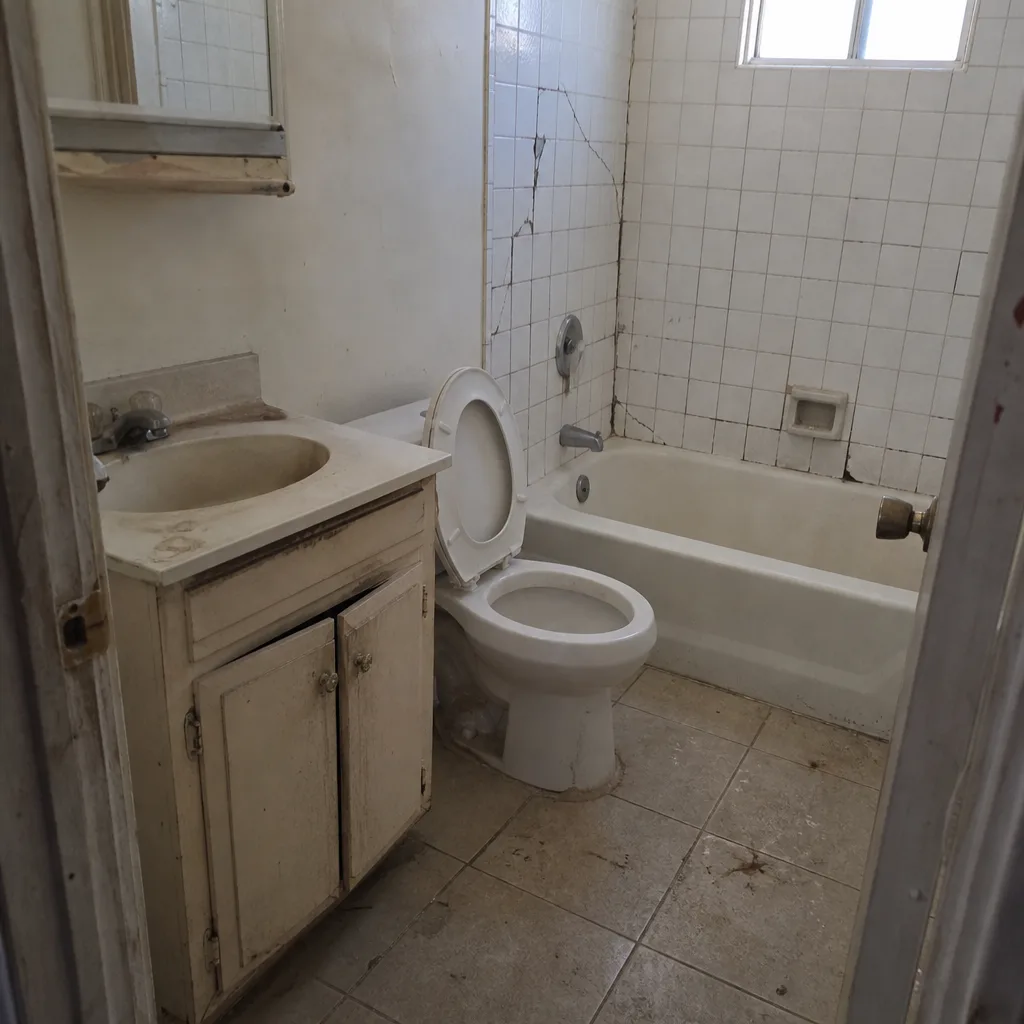 Before
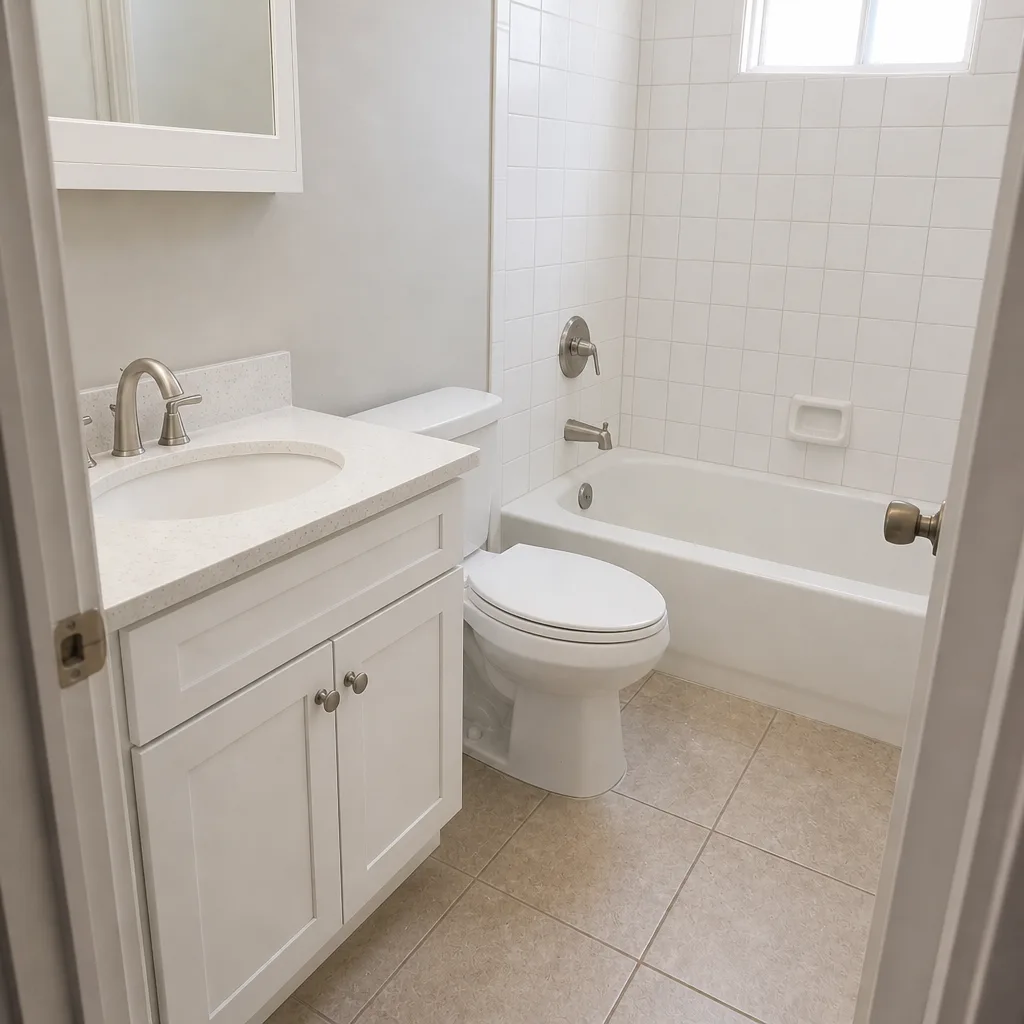 After
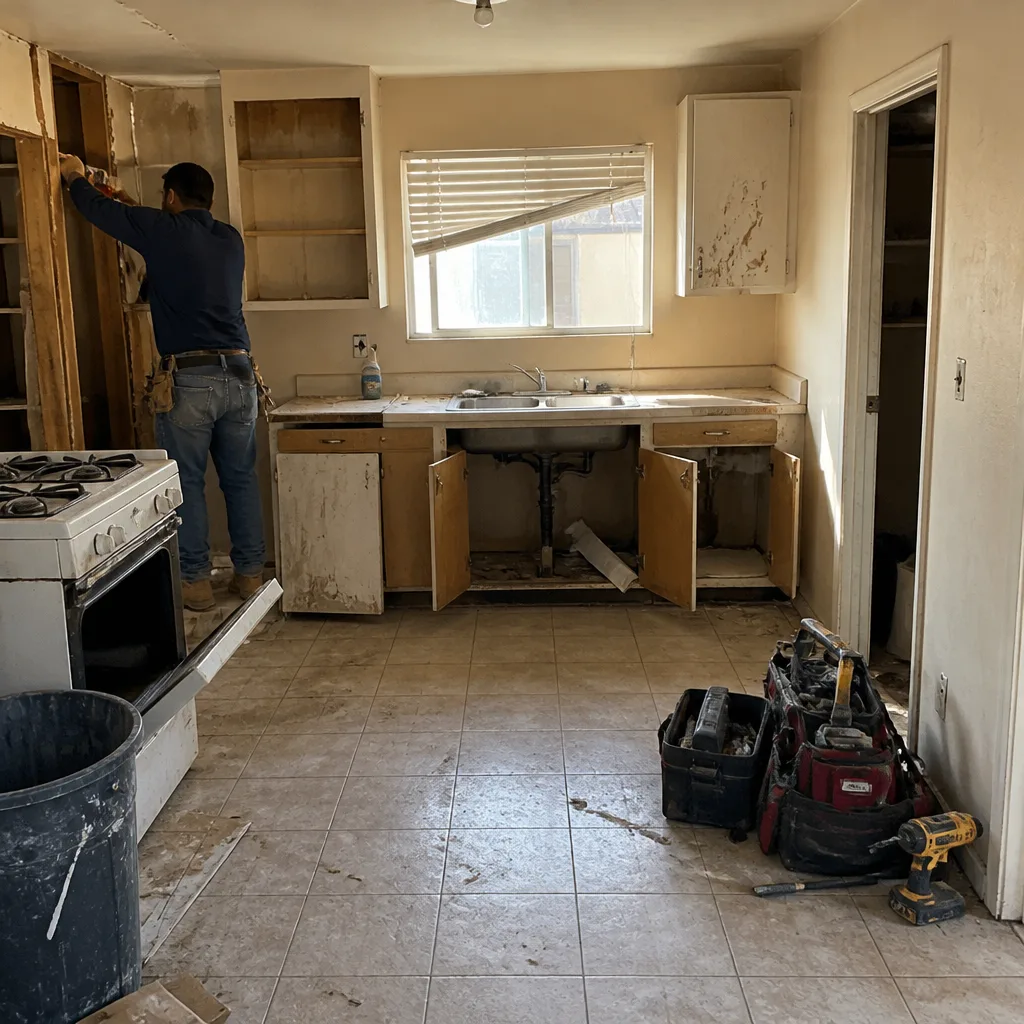 Before
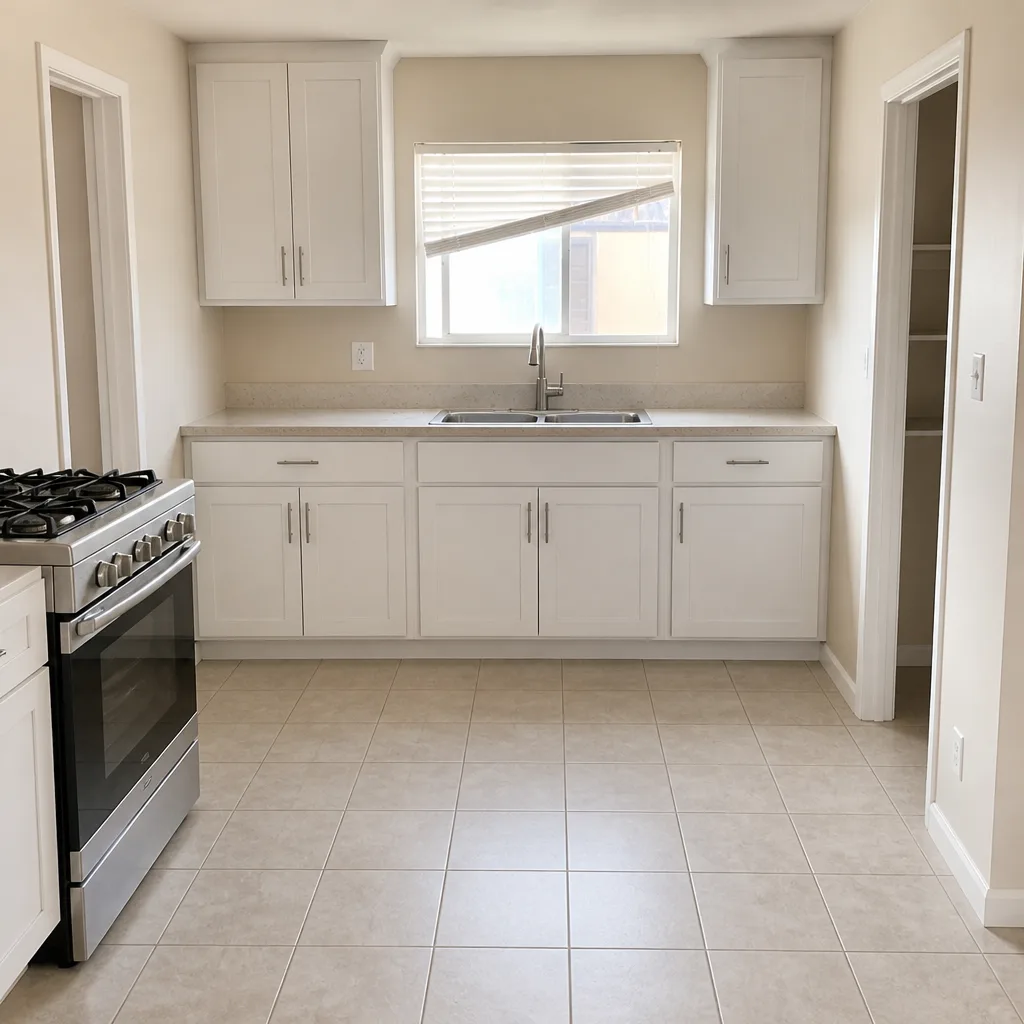 After
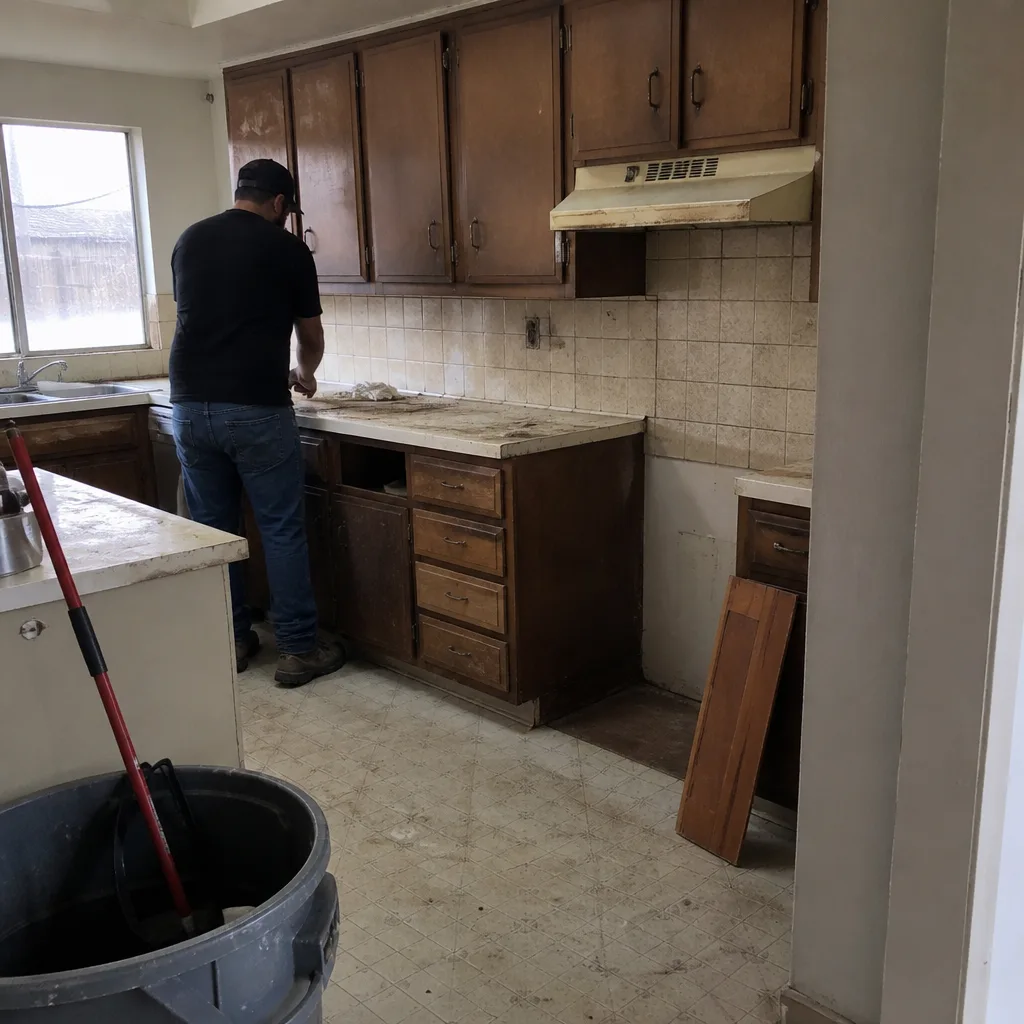 Before
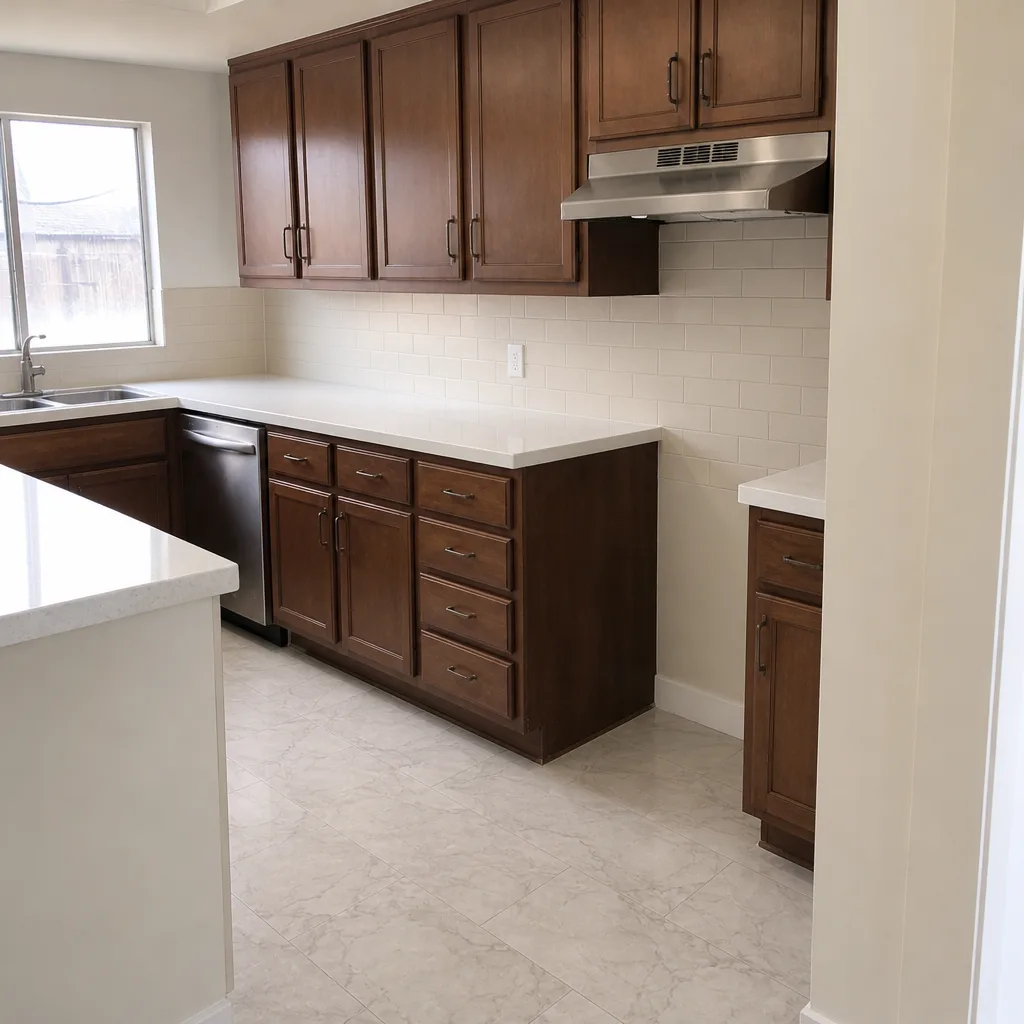 After
Frequently Asked Questions
Six to 8 inches of compacted aggregate is the practical floor for a driveway in North Las Vegas, compared with the 4 inches many national guides specify. Caliche soil expands and contracts with moisture swings, so the deeper base creates a stable layer between the reactive native soil and the pavers. The exact depth depends on your lot’s soil and loads, which is why a test pit and site review matter before quoting. Call (833) 734-2032 for an exact quote, estimates are free.
High-density pavers are rated at 8,000 psi or higher and handle heat cycling and UV better, while standard or decorative-grade pavers are softer and more prone to surface wear over time. In North Las Vegas’s heat and sun, the density rating is one of the strongest predictors of how the driveway will look and perform a decade in. Belgard and Unilock are among the lines we specify for their engineered durability.
A polymeric sand rated for high-UV environments, like Techniseal HP+, is what holds joints together in this climate. Cheap alternative sands can de-granulate under summer sun and heat, opening the joints and exposing the base. The sand also has to be applied at the manufacturer’s recommended joint depth and cured properly.
It depends on scope. In-kind replacement within the existing footprint is often a simpler process, while a new apron, a widened approach, or changes at the right-of-way commonly trigger engineering review. Confirm the requirement with your city’s building department before work begins. Projecting the permitting path into the written estimate is part of how we handle the job in North Las Vegas.
Rocking usually traces to the base and the edge, not the pavers themselves: too shallow a base over caliche, insufficient compaction in lifts, or plastic spike-in edge restraint that didn’t hold. Repointing joints won’t fix a base failure. A site review to identify the cause is the right starting point. Call (833) 734-2032 for an exact quote, estimates are free.
Often, yes. Driveway edge restraint, fence footings, and grading meet at the property line, and planning them together keeps the perimeter solid. If a fence replacement is in scope, we coordinate it with the driveway so the two don’t undermine each other. Call (833) 734-2032 to schedule a free estimate for both scopes.
The Bottom Line
Pavers on a North Las Vegas driveway are only as good as the system under them. The base has to account for caliche and go 6 to 8 inches deep in compacted lifts. The pavers should be rated at 8,000 psi or higher, the joints need a high-UV polymeric sand like Techniseal HP+, and the edges need metal restraint anchored deeply enough to hold in hard soil. Get those four things right and the paver pattern and color become what you’re actually deciding on. Get them wrong and no surface-level choice can save the driveway. That’s the playbook for this climate.
Call (833) 734-2032 for a free estimate on your driveway or paver project. We answer 24/7. Fast dispatch from 7am to 7pm, Sunday through Friday.
Written by the team at North Las Vegas Construction.